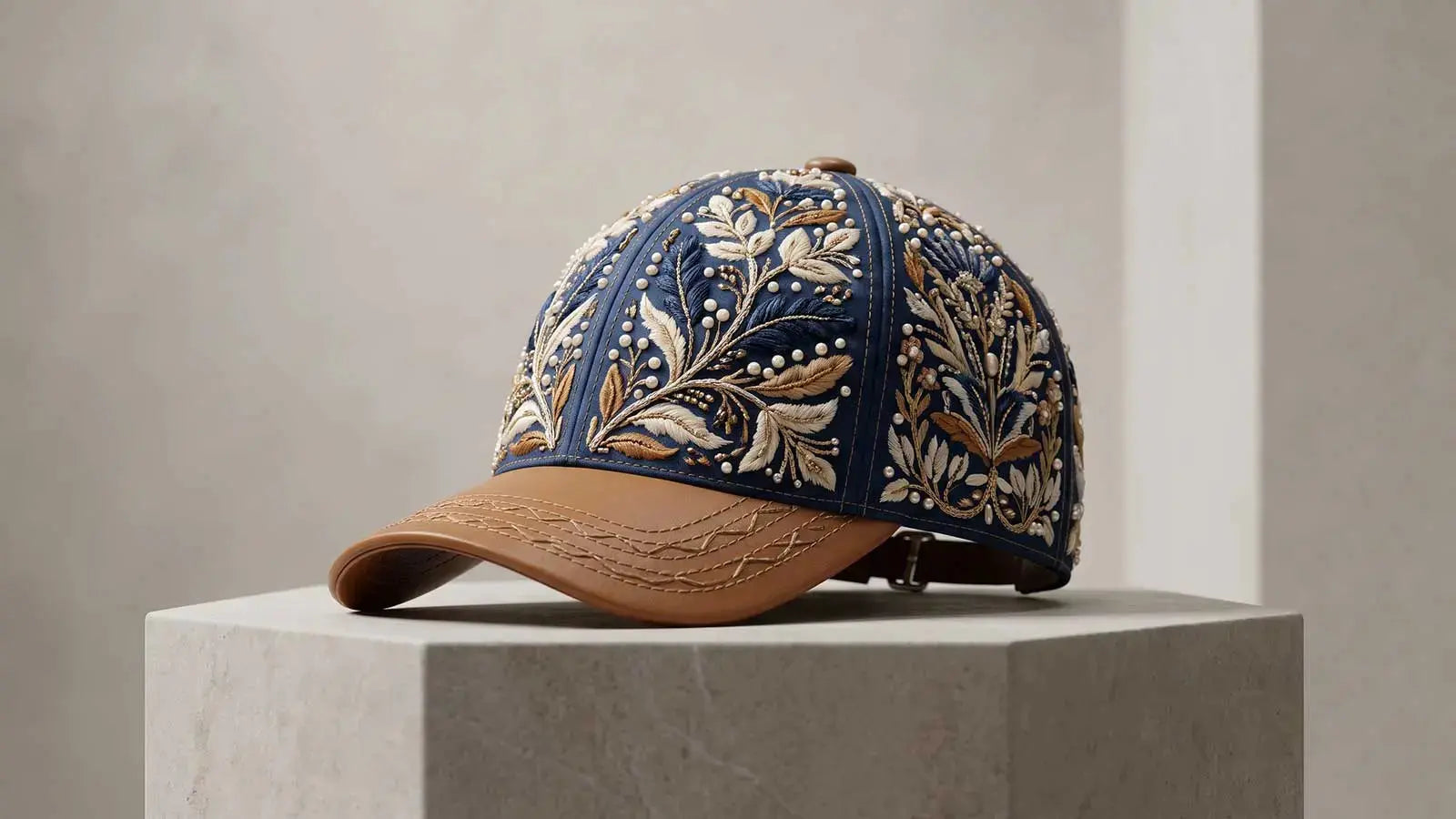
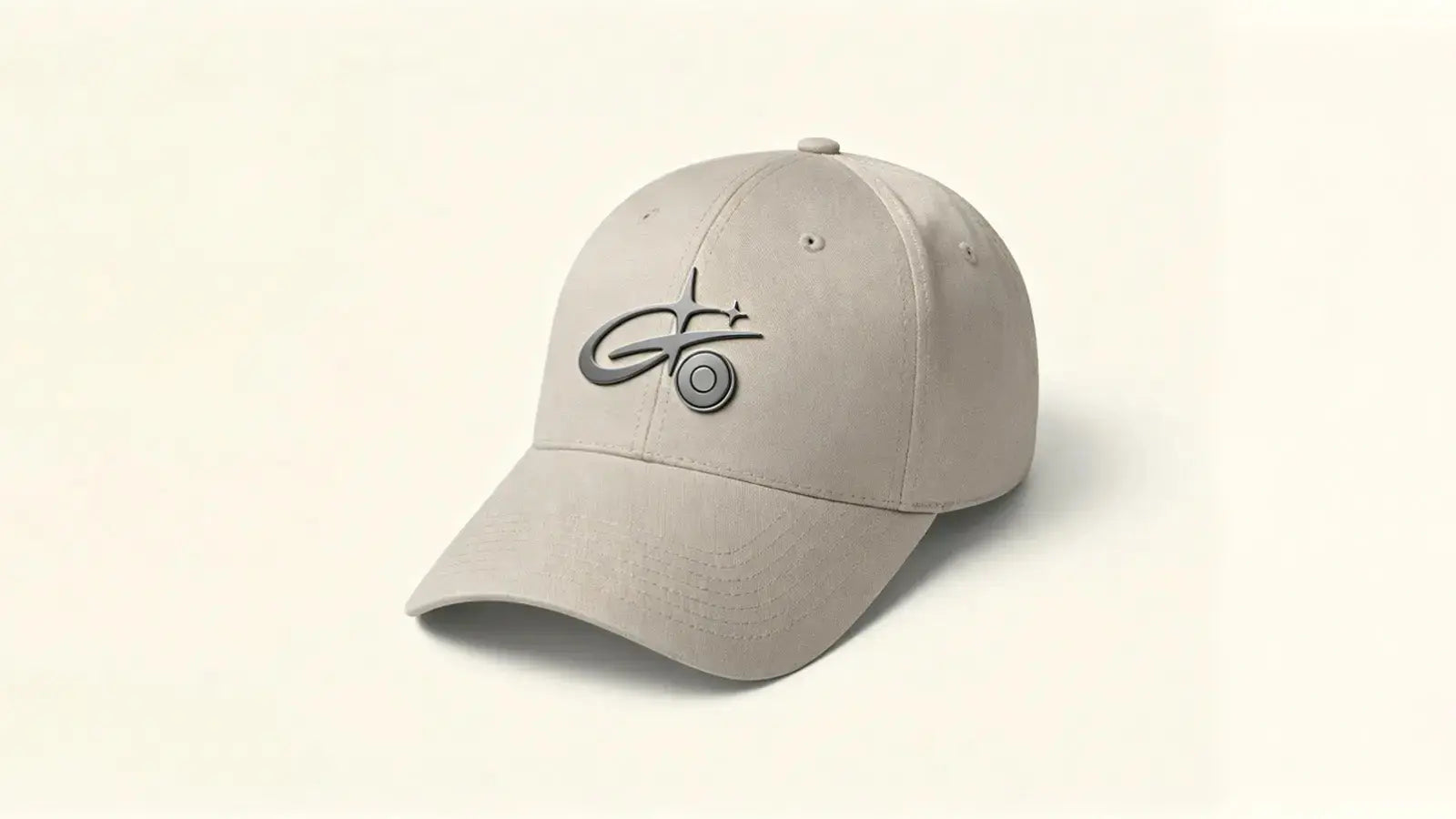
The 5 panel hat has quietly become one of the most requested silhouettes in modern headwear.
Outdoor labels chose it first, for the clean lines and low crown. Streetwear picked it up next — drawn to that wide front panel as a canvas for graphics. Today, lifestyle brands use it too.
But behind every well-made 5 panel is a set of decisions most brands only face once they're ready to place a first production order. MOQ. Fabric. Decoration method. Which country to manufacture in.
This guide walks through what actually matters — written for founders, designers, and sourcing managers preparing a custom 5 panel program.
The 5 Panel Hat, Reimagined for Modern Brands
From Outdoor Roots to Streetwear Staple
The 5 panel started life in 1980s fishing and outdoor culture. Low crown, flat front, lightweight build — made for the trail, not the runway.
Its second life began in the early 2010s. Streetwear labels saw something outdoor brands hadn't: the flat front panel was a wearable canvas. One clean surface for a logo, a graphic, or a patch.
That crossover is exactly why it's worth considering today. Few silhouettes work equally well across technical outdoor, graphic streetwear, and minimalist lifestyle.
 5 Panel vs. 6 Panel vs. Snapback — A Quick Reference
Before deciding on construction, it helps to know how the 5 panel sits against its neighbours:
- 5 Panel — Low, flat crown. One-piece front panel. Best for large or centred graphics.
- 6 Panel — Rounded, structured crown with a centre seam. The classic baseball shape. Better when embroidery sits either side of the seam.
- Snapback — Not really a shape. It's a closure — usually built on a 6 panel structured crown with a flat brim.
Rule of thumb: choose 5 panel when the brand feels clean, minimal, or technical. Choose 6 panel when you want something more universal.
Design & Craftsmanship Options
Front Panel: Embroidery, Screen Print, Woven & Rubber Patch
The front panel is the visual anchor. Which decoration you pick should follow the fabric — and the brand.
- 3D Puff Embroidery — Raised, tactile. Great for bold logos. Needs a fabric with body to hold the stitch.
- Flat Embroidery — Cleaner, lower profile. Handles finer detail than 3D, but thread still has its limits.
- Screen Print — Best for wide, multi-colour graphics. Works well on nylon and flat coated fabrics.
- Woven Patch — Premium finish for logos with fine typography.
- Rubber / PVC Patch — Durable, weather-resistant. Common in outdoor-inspired collections.
- Leather Patch (debossed or laser-etched) — Heritage feel. Pairs well with canvas or waxed cotton.
Here's what a good manufacturer actually does: push back when the combination doesn't work. A dense small-text logo on 3D puff, for example, will lose its detail. A specialist tells you before sampling — not after.
Fabric: Cotton Twill, Canvas, Nylon, Cordura, Recycled Options
Fabric decides how the hat looks, how it wears, and where it sits in your price ladder.
- Cotton Twill — The default. Balanced structure, easy to embroider, wide colour range.
- Heavy Canvas — Substantial, workwear feel. Holds shape without heavy interlining.
- Nylon (ripstop, taslan, coated) — Lightweight, technical, water-resistant. The outdoor-line staple.
- Cordura® — Abrasion-resistant. A quiet way to signal durability.
- Wool Blends — Heavier drape, seasonal. Good for FW collections.
- Recycled Polyester / Nylon — Increasingly required. Ask for GRS or RCS documentation, not just claims.
One thing to keep in mind. Technical and recycled fabrics often carry their own MOQs at the mill level. That can lift the minimum for the whole program.
Closures & Finishing Details
Most 5 panels close with a strapback — woven fabric with a metal buckle, or leather with a slider. Snapback and Velcro work too, though they change the aesthetic.
The details buyers actually notice come later. Eyelet type. Sweatband material. Undervisor colour. Custom taping inside the crown. Woven main labels. Packaging.
None of these are big cost items on their own. Together, they're what separates a hat that feels ordinary from one that feels considered.
What Defines a Professional 5 Panel Manufacturer
Specialization Over Generalization
Headwear is a category where specialization matters more than most brands expect.
A factory that makes hats every day — with dedicated crown-blocking equipment, brim dies, and operators trained on cap construction — delivers something a general apparel factory can't match. Think of it like the difference between a shop that fixes any car and one that only works on your model.
You can spot the difference quickly. A specialist talks in specifics: crown height in centimetres, brim curvature in degrees, panel proportions. A generalist speaks in approximations.
Compliance & Certifications (BSCI, WRAP, OEKO-TEX)
If you're selling into the US, EU, or Japan, factory compliance isn't optional.
The ones worth confirming upfront are BSCI or WRAP for social compliance, OEKO-TEX Standard 100 for chemical safety on fabrics and trims, and GRS or RCS if you're working with recycled materials.
A serious manufacturer keeps all of these current year-round. They can send an audit report today — not "next month, once we renew."
Sampling, QC and Traceability
A factory's real character shows in two moments: sampling, and inline QC.
Good sampling follows a defined sequence. Fit sample. Pre-production sample. Top-of-production sample. Written approval at each stage. No shortcuts.
Bulk production should include inline checks at cutting, sewing, and finishing, followed by an AQL-based final inspection. And if something goes wrong post-shipment, traceability of fabric lots and decoration batches lets you find the source. If a factory can't tell you which fabric roll was used on which order, that's a red flag.
MOQ, Pricing & Lead Time — What to Expect
Typical MOQ Ranges and Why They Exist
MOQ isn't arbitrary. It's the point where fabric consumption, machine setup, and decoration setup become commercially viable.
For 5 panel hats, a useful reference:
- 50–100 pieces per style — Possible only with stock fabric and simple embroidery. Unit cost runs high.
- 300–500 pieces per style — Common entry point for custom-dyed fabric or premium decoration.
- 500–1,000 pieces per style — The sweet spot. Balanced pricing, full customization freedom.
- 1,000+ pieces per style — Best unit economics. Custom hardware, custom packaging, setup costs spread thin.
Splitting across colourways usually means hitting the fabric MOQ per colour. That's why most brands launch with two or three focused colourways instead of a broad range.
Unit Cost at Different Order Volumes
Actual pricing depends on fabric, decoration, and finishing. But the shape of the curve is consistent.
A 100-piece order can easily run two to three times per unit what the same design costs at 1,000 pieces.
The biggest cost jumps come from three places. Switching fabric type — technical or recycled fabrics carry a premium. Adding decoration methods — each new technique means another setup charge. And premium finishing — custom labels, hangtags, and packaging quietly add up.
A transparent quotation breaks these out. If you only see a single blended number, ask for the detail.
Sampling and Production Timelines
For a standard custom program, timelines look roughly like this. Sampling takes two to three weeks from a confirmed tech pack. Bulk production runs 30 to 45 days after sample approval and deposit. Shipping adds two to five weeks by sea, or five to seven days by air.
Technical fabrics, recycled materials, or custom hardware can each stretch the pre-production stage. Locking material selection early is often the highest-leverage move a brand can make.
Manufacturing Across China, Vietnam & Cambodia
 Where a hat is made shapes cost, duty exposure, and how fast a brand can move from concept to shelf.
Operating across China, Vietnam, and Cambodia means an order can go to the facility that fits it best — not the only one available.
China — Complex Customization & Fast Iteration
China is still the reference standard for headwear complexity.
The supply chain is dense. Fabric mills, trim suppliers, and skilled labour all sit within a few hours of each other. That matters when a design needs unusual construction, multiple decoration methods, or fast sample iteration. New materials and hardware tend to appear here first, too.
Vietnam — Tariff Efficiency for US & EU Brands
Vietnam has become the strategic choice for brands shipping into the US and EU.
Current trade agreements and tariff structures make Vietnamese-origin headwear cost-effective at scale. Quality has caught up over the past decade. It's now a strong option for mid-to-high volume programs with moderate complexity.
Cambodia — GSP / EBA Duty Advantages for European Markets
For brands whose main market is the EU, Cambodia offers something the other two can't. Duty-free access on qualifying headwear under the Everything But Arms (EBA) programme.
That advantage matters most on volume-driven programs where landed cost decides shelf price. Design complexity should be moderate — Cambodia works best when the priority is efficiency, not experimentation.
Matching Your Order to the Right Facility
The right facility depends on the order. A practical way to decide:
- Choose China when the program involves complex construction, multiple decoration techniques, technical fabrics, or the fastest possible sampling.
- Choose Vietnam for mid-to-large volume shipping to US or EU, where cost matters and complexity is moderate.
- Choose Cambodia for high-volume, EU-bound programs where duty efficiency drives margin.
- Consider splitting across facilities when a collection has multiple SKUs — a hero style in China for flexibility, a core volume in Vietnam or Cambodia for margin.
Working with one manufacturer that operates in all three countries removes the pain of managing this trade-off separately with different suppliers. Quality standards, compliance documentation, and communication stay consistent across the program.
Start Your Custom 5 Panel Project
A well-made 5 panel hat is the product of dozens of small choices. Silhouette. Fabric. Decoration. Finishing. Country of manufacture.
Each one quietly shapes the finished product.
The right manufacturing partner isn't the one that quotes on a spec sheet. It's the one that helps you navigate those choices — and pushes back when a decision won't age well.
If a custom 5 panel program is on your roadmap, the most productive next step is a conversation grounded in your artwork, materials, and volume.
Frequently Asked Questions
Can you help if we don't have a finished design yet?
Yes. Many brands come in with a mood board, a logo, and a rough silhouette in mind — not a full tech pack.
We can develop tech packs, recommend fabric and construction based on the intended use, and guide decoration choices that suit the artwork. The more clarity you bring on brand direction and target price, the faster the process moves.
Can you match specific Pantone colours?
For most fabrics, yes. Cotton twill, canvas, and standard synthetics can be dyed to a Pantone reference with a lab dip approval before production.
A small tolerance always exists between reference and finished fabric — that's the nature of dyeing textiles. What matters is that the tolerance is disclosed upfront, and that the lab dip is signed off before bulk. Some technical fabrics have narrower colour ranges due to how they're coated, which we'll flag during quoting.
Can we manufacture in Vietnam or Cambodia to reduce US or EU tariffs?
Yes. That's one of the main reasons brands choose to work across our three facilities rather than a single-country supplier.
Vietnam is often the strongest option for brands shipping to the US or EU at scale. Cambodia offers duty-free access to the EU on qualifying headwear under the EBA programme, which can meaningfully lower landed cost on volume orders. We'll help match the order to the facility where the numbers work best.
Do you offer custom labels, hangtags, and packaging?
Yes — full private label is standard.
That covers woven main labels, size and care labels, hangtags, polybags, custom inner boxes, and branded shipping cartons. Some items have their own MOQs (custom polybags and boxes especially), so it's worth deciding on packaging early so those minimums fold into the main production timeline.