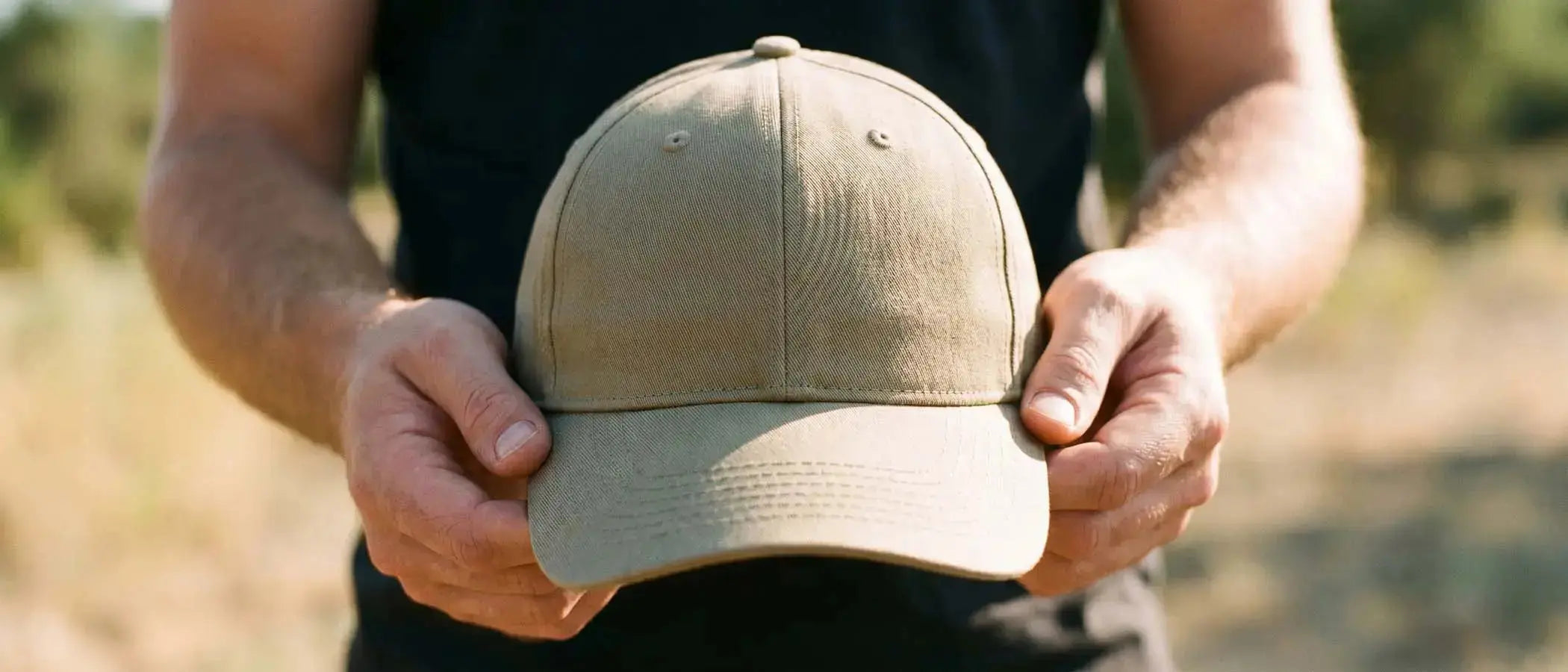
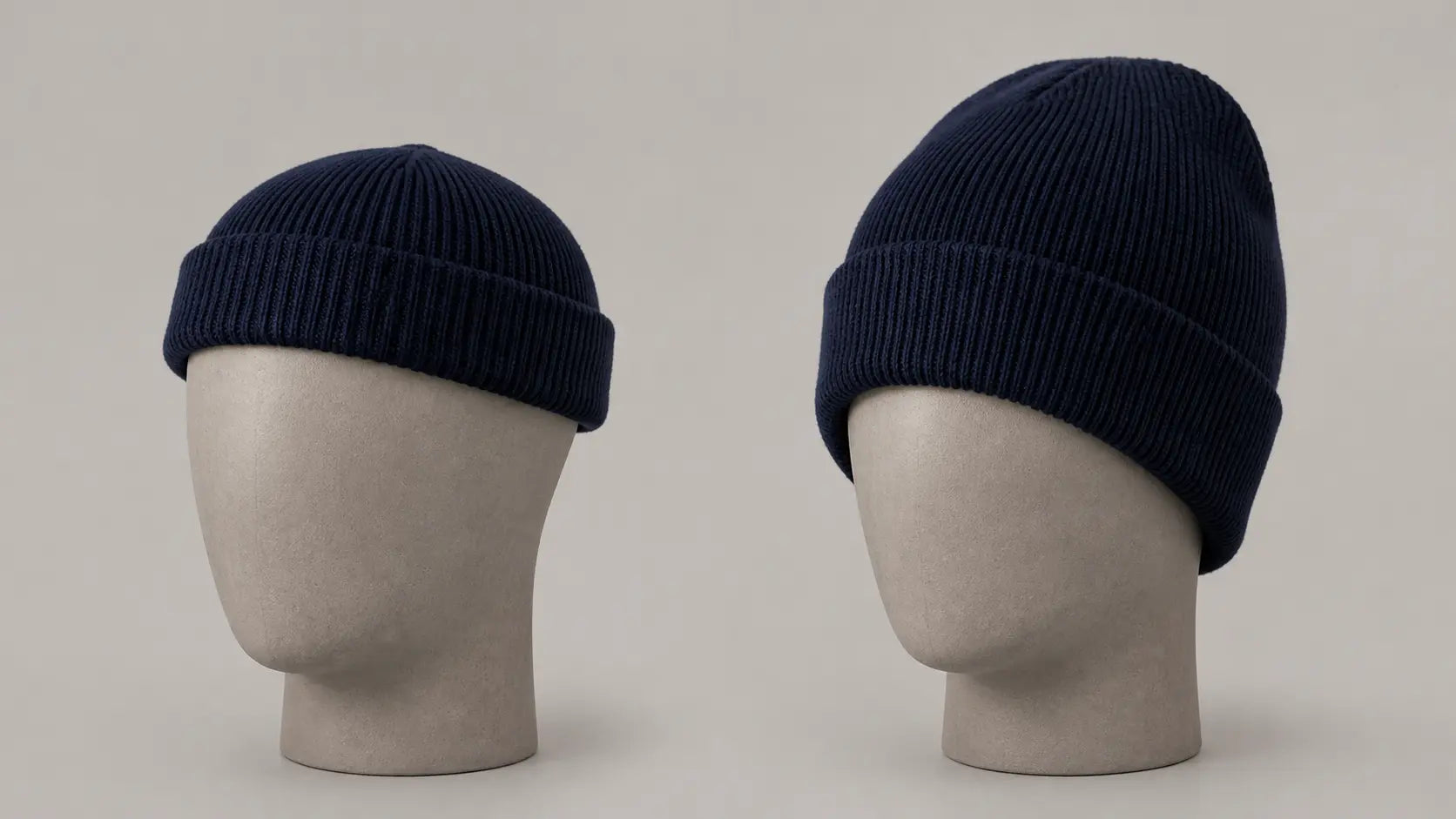
“We want a premium Merino wool hat.”
That sounds clear. The factory still has many decisions to make.
Should the wool be 18.5 or 22 microns? Knitted, woven or felted? Pure Merino or blended with nylon? Can the finished hat be washed without shrinking?
Two materials can both be labelled 100% Merino wool and produce very different hats. One may feel soft but lose shape. Another may hold a clean crown but feel too coarse against the forehead.
The solution is to connect the desired look and use to measurable material fields, tests and approved samples.
Quick Summary
 Before asking for a quotation, decide:
1. Hat type: baseball cap, five-panel cap, bucket hat, beanie or felt hat
2. Target use: fashion, winter, active outdoor or uniform
3. Material: pure Merino or an exact blend
4. Touch: next-to-skin soft, structured or textured
5. Care: dry clean, hand wash or tested machine wash
6. Decoration: embroidery, patch or woven label
7. Approval: fabric swatch, decorated panel and finished sample
If a technical value is unknown, send a reference hat. Ask the manufacturer to propose the value and test the exact production material.
Merino Describes the Fibre, Not the Fabric
Merino is wool from Merino sheep. It does not explain how the material is made.
The fibre can become:
· A fine knitted beanie
· A smooth worsted wool baseball cap
· A brushed flannel cap
· A wool-blend melton shell
· A pressed felt hat body
Each route needs a different specification.
For woven and knitted materials, record the yarn, construction, finished weight and finish. For felt, control thickness, density, weight, stiffness and forming behaviour.
Use Micron to Control Touch
 Wool fibre diameter is measured in micrometres, commonly called microns.
Finer fibres bend more easily and usually feel softer. Broader fibres can provide more body and wear resistance.
|
Mean fibre diameter |
General character |
Possible hat direction |
Buyer caution |
|
Below 18.5 µm |
Very fine and soft |
Premium beanies and sensitive next-to-skin areas |
Higher cost; may need support for hard wear |
|
18.5–19.5 µm |
Fine and versatile |
Premium beanies, soft caps and linings |
Confirm pilling and stability |
|
19.6–21.5 µm |
Balanced softness and body |
Knitted hats and unstructured caps |
Approve the actual fabric touch |
|
21.6–24 µm |
Firmer and more robust |
Structured woven caps and outerwear styles |
Check forehead comfort |
These are development references, not official hat grades.
Micron cannot predict comfort alone. Fibre length, coarser fibres in the distribution, yarn twist and finishing also change the result.
When micron matters, request an agreed test certificate. IWTO test methods can report mean fibre diameter and its distribution.
Match Construction and Blend to the Hat
Worsted woven wool has a cleaner surface and works well for refined baseball caps, uniform caps and clear embroidery.
Woollen-spun or brushed fabric looks fuller and more textured. It suits winter, heritage and workwear styles, but the raised surface can pill or hide fine stitches.
Knitted Merino is common for beanies. Specify yarn count, ply, machine gauge, knit structure, finished dimensions and recovery.
Pressed felt has no woven or knitted yarn structure. Specify body weight, thickness, density, stiffness and dimensions after blocking.
Pure Merino provides a premium natural touch. A blend may improve durability, shape or price:
· Merino/nylon: reinforcement and abrasion resistance
· Merino/polyester: shape support, faster drying and cost control
· Wool/acrylic: bulk and accessible pricing, with pilling risk in some constructions
Blend percentages still require testing. Construction and finishing can change the result as much as fibre content.
Practical Starting Points by Product
For a fine-gauge beanie, start with softness, recovery and dimensional stability. A finer Merino may improve comfort, but the knit structure and yarn twist must still control stretching and pilling.
For a wool baseball cap, start with a stable woven fabric. The crown needs enough body to sew cleanly and support the logo. A wool/polyester blend can be easier to control when the design requires a crisp shape or larger production quantity.
For an active outdoor hat, consider a Merino blend rather than choosing pure wool automatically. Nylon can reinforce high-wear areas. Polyester can improve drying and shape retention. Test sweat, wet rubbing and drying time on the finished construction.
For a pressed felt hat, micron is only one purchasing field. Density, body weight, stiffness and blocking performance have a direct effect on crown definition and brim shape.
These are development directions. The approved result should come from the actual swatch and finished sample.
Write a Factory-Ready Specification
 Avoid “soft premium wool” and “heavy Merino.” Use measurable fields.
|
Field |
What to state |
Why it matters |
|
Fibre |
Exact content, Merino type and micron when required |
Controls claims, touch and cost |
|
Yarn |
Worsted or woollen, count and ply |
Changes surface, weight and strength |
|
Construction |
Weave, EPI × PPI, machine gauge or knit structure |
Controls stability and appearance |
|
Finished weight |
GSM, thickness or finished hat weight with tolerance |
Controls body and repeatability |
|
Finish |
Brushed, milled, shrink-resistant or water-repellent |
Changes touch, care and decoration |
|
Colour |
Colour standard and approved lab dip |
Controls shade |
|
Care |
Dry clean, hand wash or tested machine wash |
Sets the stability requirement |
|
Approval |
Sealed swatch and sample revision |
Controls bulk variation |
An illustrative woven-cap line could read:
70% Merino wool / 30% recycled polyester, worsted-spun yarn, 2/2 twill, finished 260 GSM ±5%, piece dyed, soft matte finish, colour and touch to sealed swatch.
This example shows the format. It is not a FOREMOST stock-fabric recommendation.
Control Shrinkage, Felting and Shape
Untreated wool has microscopic surface scales. Moisture, heat and movement can cause them to interlock. This may create permanent felting, densification and shrinkage.
Wool can also change size through relaxation and moisture absorption.
Before sampling, ask:
· Is the material untreated or shrink-resistant?
· What process supports a “Superwash” claim?
· Which wash and drying method supports the care label?
· Will the shell, sweatband, thread and brim material change at similar rates?
· Are finished dimensions recorded before or after steaming and conditioning?
Test the complete hat. Measure the head opening, crown height, panel seams, brim and decoration before and after the agreed care cycle.
Record the tool, measurement points, conditioning time, wash procedure, drying method and allowed change. ISO 6330 provides domestic washing and drying procedures. ISO 5077 covers dimensional-change calculations.
Also check felting, crown twisting, seam puckering, sweatband distortion, brim deformation and embroidery bubbling.
Check Pilling, Decoration and Colour
 Pilling depends on fibre diameter, fibre length, yarn twist, construction and wear. Finer wool does not automatically pill less.
Use an agreed ISO 12945 method. State the apparatus, test duration and minimum grade. Wear trials are useful around the sweatband, brim edge, back opening and logo.
|
Decoration |
Main risk |
Factory direction |
|
Direct embroidery |
Puckering or buried stitches |
Define backing, topping, needle and stitch density |
|
Patch or label |
Excess stiffness or edge lifting |
Control weight, edge finish and attachment |
|
Heat-applied badge |
Scorching, gloss or shrinkage |
Validate time, temperature and pressure |
|
Screen print |
Uneven result on a raised surface |
Confirm ink, preparation, curing and wash performance |
Brushed wool may need water-soluble embroidery topping so stitches remain visible. Fine knitted Merino often needs lower stitch density to avoid a stiff, distorted logo area.
For colour, consider perspiration, wet and dry rubbing, light, water and the intended care process. State the exact test method and minimum grade.
Test the final shade with the sweatband, thread and decoration. A shell can pass alone and still transfer colour at a damp seam.
Build Approval in Three Stages
Do not wait for a completed sales sample before checking the material.
Stage 1 — Material approval: Approve fibre content, micron evidence, colour, touch, construction, weight and finish on a labelled swatch.
Stage 2 — Decoration approval: Test the actual embroidery, patch or print on a production-size panel. Check the front and back after conditioning.
Stage 3 — Hat approval: Review the completed hat after steaming and the intended care test. Measure the agreed points and record the sample revision.
If the factory changes the yarn source, construction, dye lot or finish, identify whether reapproval is required. A colour match alone cannot approve a different wool fabric.
Verify Wool Claims
RWS and ZQ cover different sourcing questions.
The Responsible Wool Standard (RWS) covers animal welfare, land management and chain of custody. Certified claims require covered supply-chain stages and valid documents.
ZQ is an on-farm Merino programme covering animal welfare, environmental, social and fibre-quality requirements. Its farm certification does not extend beyond the farm gate, so finished-product traceability needs supporting commercial records.
Before publishing a claim, verify the supplier certificate, material category, certified percentage, order records and current logo rules.
“Merino,” “mulesing-free,” “traceable,” “RWS” and “ZQ” each require their own evidence.
Buyer Checklist
Send the manufacturer:
8. Hat type, target customer and climate
9. Fibre content and micron requirement
10. Woven, knitted or felt construction
11. Yarn, fabric weight, thickness and finish
12. Colour standard
13. Care label and dimensional-change limit
14. Pilling and colourfastness requirements
15. Decoration method and approved test panel
16. Certification documents when claimed
17. Sealed swatch and completed-hat sample
Keep the revision number on every approval.
Approve the Complete Hat
Merino can produce a fine beanie, a clean wool baseball cap or a warm heritage-style hat. The fibre name cannot guarantee the result.
Use three steps:
Specify: Record fibre, micron, construction, weight, finish and care.
Test: Check shape, pilling, colour and decoration on the production material.
Approve: Seal the swatch, decorated panel and completed hat after final conditioning.
Send FOREMOST your reference hat, artwork, target use, quantity and destination market. The development team can propose a measurable Merino wool specification for sampling.
Frequently Asked Questions
Is Merino wool suitable for baseball caps?
Yes. Worsted woven Merino or a wool blend can create a clean, premium baseball cap. Approve the complete hat after steaming and conditioning.
Are Merino wool hats itchy?
Finer fibres usually feel softer. Fibre distribution, yarn twist, finishing and the sweatband also affect comfort.
Do Merino wool hats shrink?
They can. Specify the care process and test the complete hat for relaxation, felting and dimensional change before bulk production.
Can a Merino wool hat be embroidered?
Yes. Match the backing, topping, needle and stitch density to the material.
Is 100% Merino better than a wool blend?
It depends on the product. Blends can add reinforcement, shape support, faster drying or cost control.