Not every hat is made the same way. Here's a breakdown of the four core systems behind the hat manufacturing process — cut & sew, knitted, straw, and felt — and why the method matters as much as the design.
When a brand comes to us with a sketch or a reference photo, one of the first questions we ask isn't about color or logo placement — it's what the hat is actually made of, because that determines which production system it belongs to. Most people assume "making a hat" is basically one process with small variations. In reality, headwear splits into four fundamentally different manufacturing systems, each with its own machinery, skill set, and factory floor. Understanding which one your product falls into changes what's possible, what it costs, and how long it takes.
🔽 Quick Navigation
- 📌 Why the Manufacturing System Matters Before the Design Does
- 📌 Cut & Sew: The System Behind Structured Caps
- 📌 Knitted: Shape Built In From the First Stitch
- 📌 Straw & Braided: Natural Fiber Meets Precision Blocking
- 📌 Felt & Blocked: Steam, Shape, and Structure
- 📌 How to Match the Right System to Your Product
- 📌 Conclusion
- ❓FAQ
Why the Manufacturing System Matters Before the Design Does
Every hat category — caps, beanies, sun hats, western hats — ultimately gets built through one of four production systems. The hat manufacturing process you land in isn't really a style choice; it's dictated by the material and the finished silhouette you're after. A brand that wants a structured trucker cap and a brand that wants a wide-brim summer fedora aren't just choosing different products — they're entering entirely different factories, working with different machinery operators, and following different timelines.
Knowing this upfront helps with two very practical things: setting realistic expectations for lead time, and avoiding a request that's actually impossible within a given system (like asking for a fully seamless, knitted construction on a stiff-brimmed baseball cap).
Cut & Sew: The System Behind Structured Caps

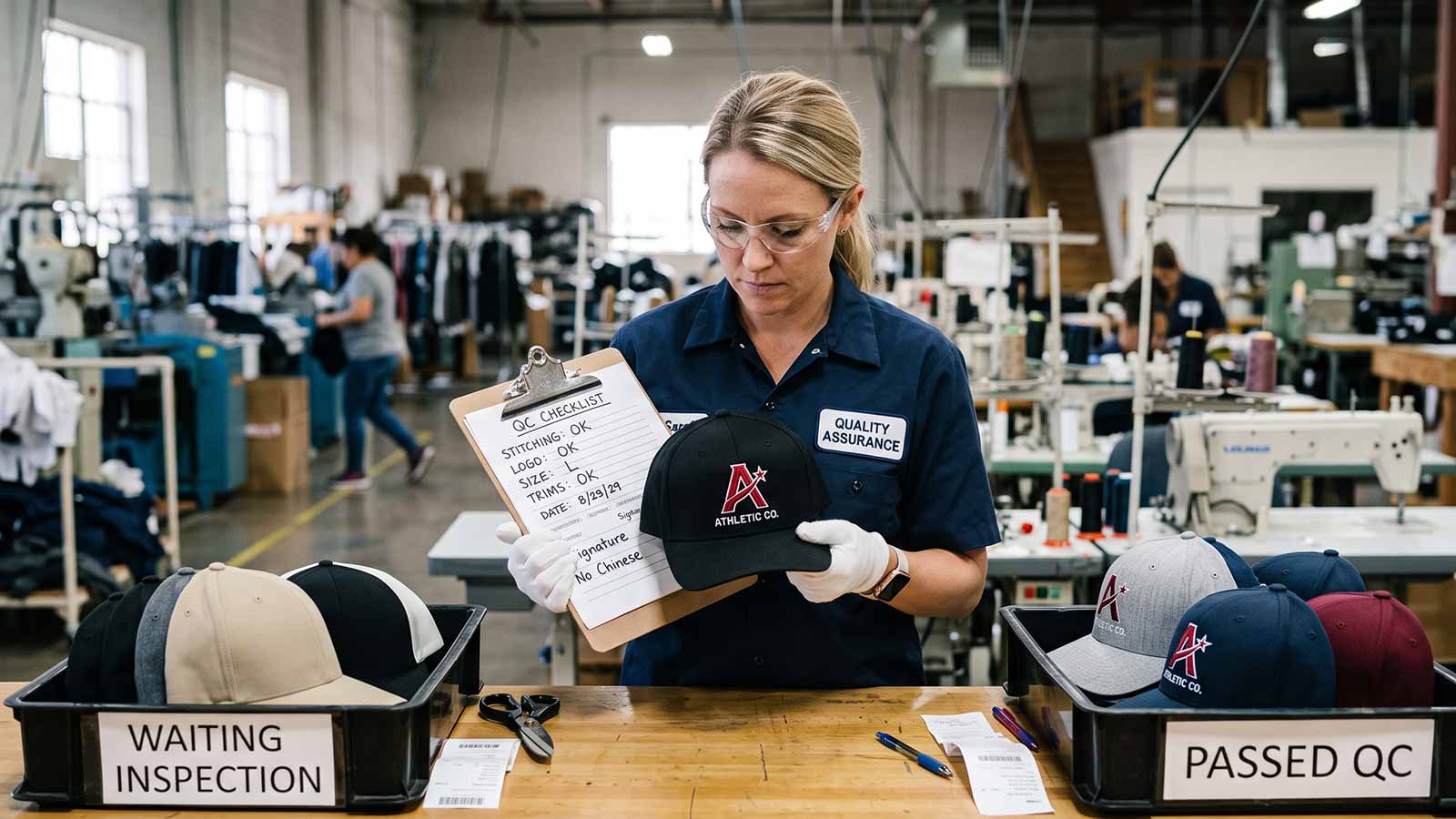
Cut and sew is the manufacturing system behind most caps you'd recognize instantly — baseball caps, trucker hats, snapbacks, and 5-panel or 6-panel caps. The process starts with woven fabric, which is cut into flat panels according to a pattern, then sewn together around a crown and finished with a brim. This is where pattern engineering and brim forming do the heavy lifting: the exact curve of a visor, the stiffness of a front panel, and the way panels meet at the crown are all determined at this stage, long before any logo goes on.
Because the fabric is cut and assembled rather than shaped as one continuous piece, cut and sew construction gives brands the most flexibility for mixing materials — a foam front panel with a mesh back, for instance, or a cotton crown with a corduroy brim. It's also the system best suited to structured, rigid silhouettes, since the panels can be reinforced with buckram lining to hold their shape. You can see this construction across our trucker hats collection, where foam-front, mesh-back panels are stitched together exactly this way.
Knitted: Shape Built In From the First Stitch

Knitted headwear — beanies, balaclavas, and knit berets — works in almost the opposite direction. Instead of cutting flat fabric into panels, the shape is built directly into the fabric as it's knitted, using techniques like yarn development, jacquard patterning, and intarsia for multi-color designs. A beanie's crown, for example, is typically knitted as a continuous tube that's then closed and finished at the top, rather than sewn together from separate cut pieces.
This is why knitwear tends to have a different feel and fewer visible seams than a cut and sew cap — the structure comes from the knit itself, not from stitching panels together afterward. It also means color and pattern work (stripes, color-blocking, jacquard logos) can be built directly into the fabric rather than added on top of it later. Our beanies collection and knitted balaclavas are both produced through this system.
Straw & Braided: Natural Fiber Meets Precision Blocking

Straw and braided headwear — fedoras, boaters, wide-brim sun hats, and lifeguard hats — starts with a completely different raw material: braided natural or paper fiber, rather than woven or knitted textile. The braid is first constructed as a long continuous strip, then coiled and stitched into shape, or woven directly into a mold. From there, the piece goes through blocking — a process that uses heat, steam, and a wooden or metal form (called a hat block) to shape the crown and brim into their final silhouette.
Straw construction demands a different kind of craftsmanship than cutting and sewing fabric, since the material is more rigid and less forgiving of mistakes — a poorly blocked brim can crack rather than simply looking uneven. Our straw hats collection covers this full range, and for brands developing a fully original straw silhouette from scratch, our custom straw hats program walks through braid selection, blocking, and finishing as separate development stages.
Felt & Blocked: Steam, Shape, and Structure

Felt hats — fedoras, western and cowboy hats, bowlers, and cloches — share the blocking step with straw hats, but start from an entirely different material: wool or fur fibers pressed and matted together into a dense, non-woven fabric, rather than a braided strip. Because felt has no woven grain or knit structure, it can be steamed and stretched in almost any direction, which is what allows for the deep, dramatic crown shapes you see on a classic western hat.
The process typically moves through crown shaping, brim shaping, and a final surface finishing stage — brushing, singeing, or ironing the felt to achieve a smooth, matte, or textured surface depending on the desired look. It's a slower, more hands-on process than cut and sew construction, which is part of why felt hats tend to carry a higher price point and longer lead time.
How to Match the Right System to Your Product

If you're not sure which system your product idea belongs to, a few quick questions usually settle it:
- Does the silhouette need a rigid, structured shape with visible panel seams? That points to cut and sew.
- Is the product soft, stretchy, and worn close to the head with no hard brim? That points to knitted construction.
- Does it have a wide, shaped brim in a lightweight, breathable material? That's most likely straw or braided construction.
- Does it need a dramatic, sculpted crown in a dense, matte fabric? That's felt.
Some brands end up building a full headwear line that spans more than one system — a knitted beanie for winter, a straw fedora for summer, and a cut-and-sew cap as a year-round staple. Coordinating that kind of mixed program is exactly what a manufacturing network with in-house capability across all four systems is built for, rather than trying to source each category from a different specialized factory.
Conclusion
The hat manufacturing process isn't one assembly line with different trims — it's four genuinely distinct systems, each shaped by its own material and its own set of skilled techniques. Cut and sew gives you structure and flexibility, knitted gives you built-in shape and comfort, straw gives you lightweight breathability, and felt gives you dramatic, sculpted form. Knowing which system your product belongs to before you start sampling saves time, sets realistic expectations, and helps you brief a factory in a way that actually matches how the hat will be made. If your line spans more than one of these systems, working with a single manufacturing network that runs all four in-house — rather than splitting sourcing across separate specialist factories — is usually the simpler path to a consistent quality standard across your whole collection.
❓FAQ
Q1: Can one factory produce all four types of headwear?
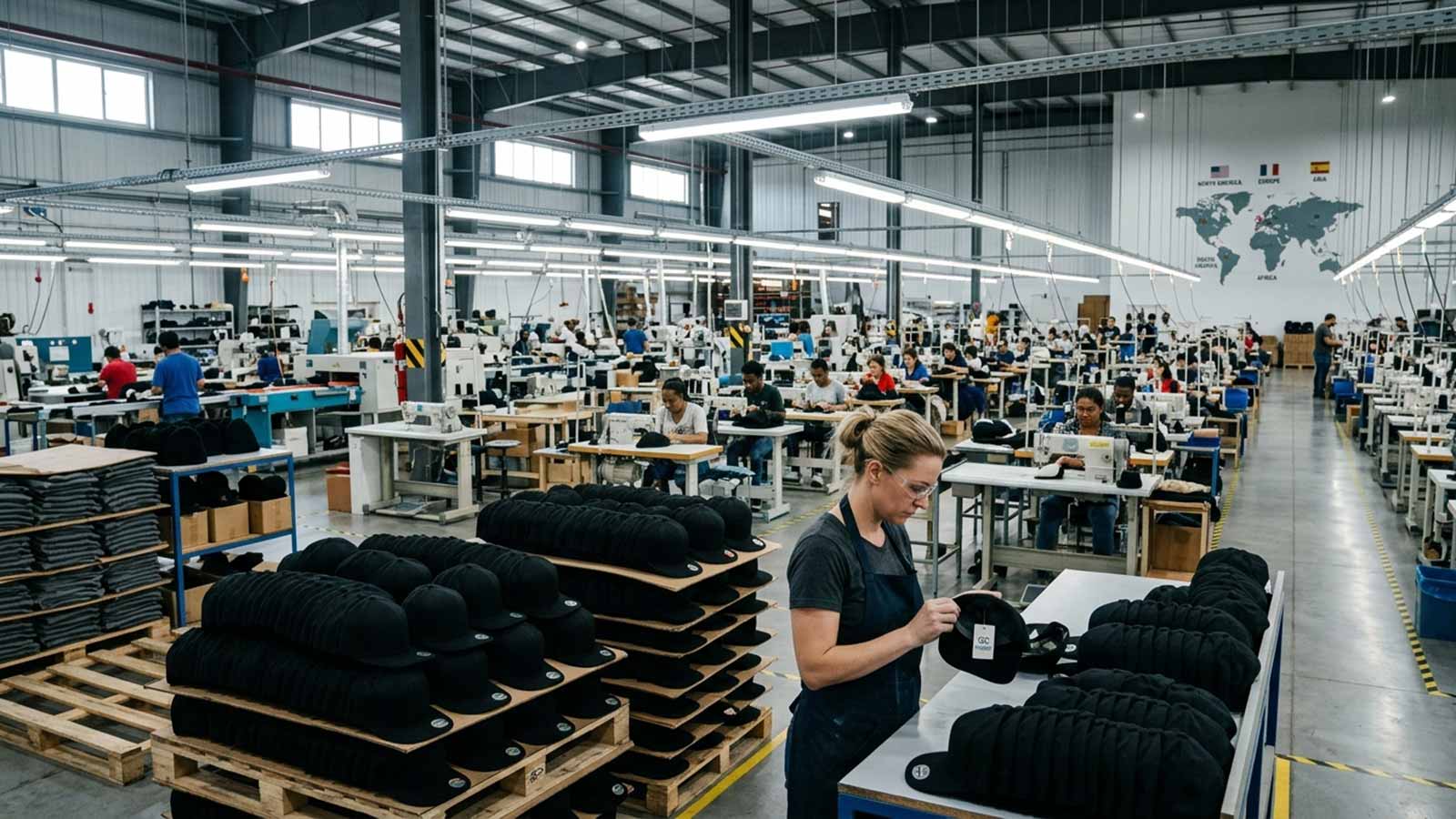
It's uncommon, since each system requires different machinery and skilled operators — cutting and sewing tables, knitting machines, braiding equipment, and steam-blocking stations are rarely all housed under one roof. Larger manufacturing networks sometimes coordinate all four through affiliated specialized facilities rather than a single production line.
Q2: Which manufacturing system is fastest to produce?
Cut and sew construction is generally the quickest to sample and produce at scale, since the process is highly standardized. Felt hats, with their multi-stage blocking and finishing process, typically take the longest.
Q3: Is knitted headwear cheaper than cut and sew?
Not necessarily — it depends on the yarn, gauge, and pattern complexity. A simple acrylic beanie can be less expensive than a heavily reinforced structured cap, but an intricate jacquard or intarsia beanie can cost more than a basic cut and sew cap.
Q4: Why do straw and felt hats cost more than caps?
Both involve more manual, skilled labor — blocking, shaping, and finishing are harder to fully automate than cutting and sewing flat panels, which pushes both the production time and the cost per unit higher.