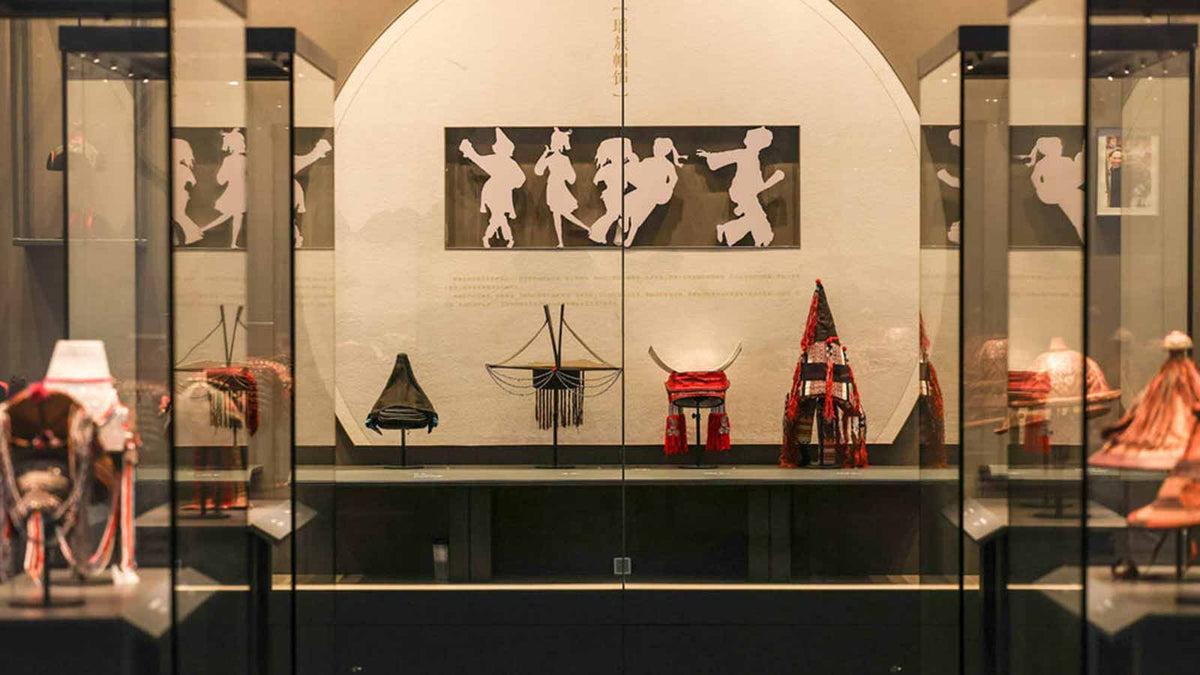
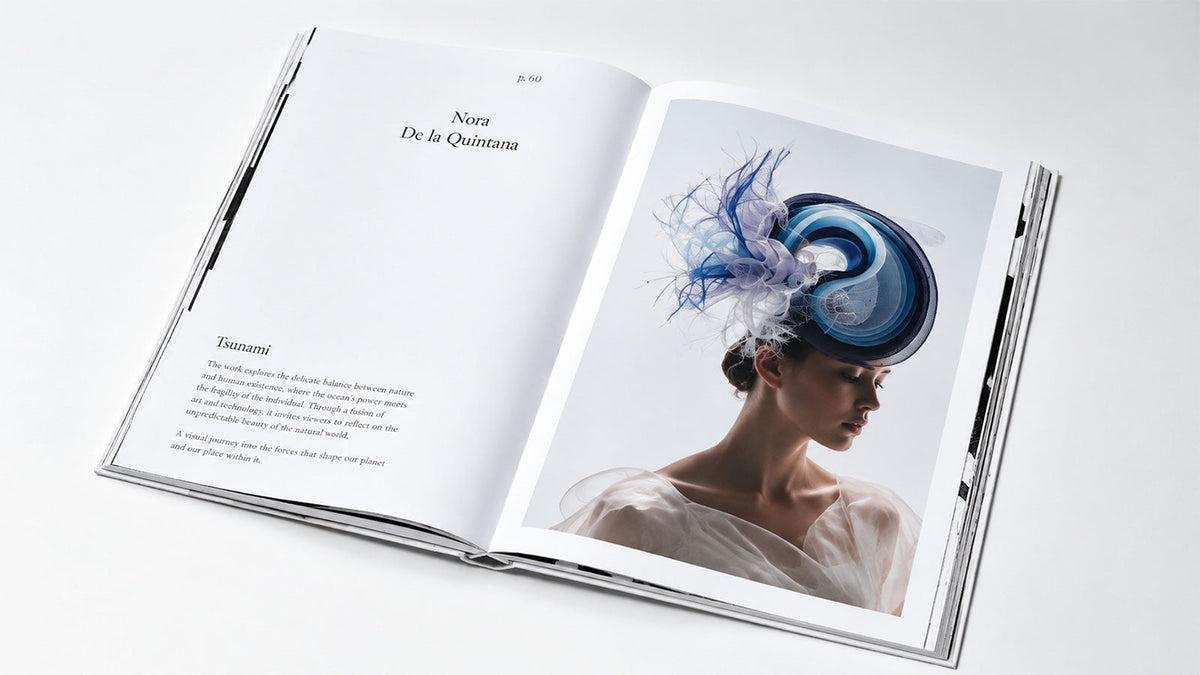
Beyond feathers and straw, a deeper layer of Chinese craft heritage is finding its way onto hat brims and crowns. Here's how gold wire filigree, mother-of-pearl inlay, and other intangible cultural heritage crafts are being adapted into modern headwear.
Hat culture has always borrowed from wider craft traditions — embroidery, lacework, metalwork — but a specific category of Chinese craftsmanship is having a visible moment in couture and heritage-driven headwear design right now: intangible cultural heritage (ICH) techniques, the kind UNESCO and national heritage bodies recognise as skills passed down through generations rather than objects preserved in a case. Several of these crafts, some dating back over a thousand years, are now being worked directly into hat crowns, brims, and bands — not as a decorative afterthought, but as the entire reason a piece exists.
🔽 Quick Navigation
- 📌 Why Chinese Intangible Heritage Crafts Are Showing Up in Hat Design
- 📌 Gold Wire Filigree: Turning Metal Thread into Wearable Art
- 📌 Mother-of-Pearl Inlay and Cloisonné: Colour and Shimmer Without Paint
- 📌 Lacquer, Silk Tapestry, and Bamboo: Techniques Measured in Hours, Not Minutes
- 📌 A Quick Reference: Heritage Techniques and What They Bring to Headwear
- 📌 Conclusion
- ❓FAQ
Why Chinese Intangible Heritage Crafts Are Showing Up in Hat Design

"Intangible cultural heritage" is a specific designation, not just a marketing phrase. It refers to practices, skills, and knowledge — as opposed to physical artefacts — that a community recognises as part of its cultural identity and actively works to keep alive through practice and transmission to new craftspeople. China maintains one of the world's largest national ICH registries, covering everything from opera and festivals to specific textile and metalwork techniques, each with recognised master practitioners responsible for training the next generation.
For hat design specifically, this matters because many of these techniques were historically applied to court and ceremonial headwear in the first place — gold wire crowns, lacquered ornaments, and inlaid hairpieces were part of the same visual world as elaborate court hats. Bringing the techniques back into contemporary hat design isn't a stretch; it's closer to a reunion, and it gives a hat something a printed pattern or standard embroidery simply can't replicate: a visible, physical record of skilled hand labour.
Gold Wire Filigree: Turning Metal Thread into Wearable Art

Gold wire filigree (known in Chinese as huasi, or "flower thread") is a national-level intangible heritage technique that dates back to the Tang dynasty and reached its peak in the Ming and Qing imperial courts. The process involves drawing gold into extremely fine threads, then bending, twisting, and soldering them into pictorial designs — clouds, flowers, birds — entirely without pigment. The shimmer comes purely from the worked metal itself.
Historically, filigree work adorned imperial treasures and court headpieces. In a modern hat context, the technique appears as raised metallic motifs across a crown or brim — a technique that requires the same patience and hand-soldering skill whether it's shaping a jewellery box or a piece of wearable headwear. It's a labour-intensive craft: a single dome-shaped ornament can represent dozens of hours of hand work, which is part of why filigree pieces tend to sit at the top end of couture and one-off commissions rather than production runs. The finished surface also behaves differently under light than a printed or embroidered pattern — because the metal itself is worked into relief rather than laid flat, the piece genuinely changes appearance as the wearer moves, an effect no flat surface treatment can fully reproduce.
Mother-of-Pearl Inlay and Cloisonné: Colour and Shimmer Without Paint

Mother-of-pearl inlay is another national ICH technique, built around cutting and piecing natural shell into pictorial designs that catch and shift colour with the light — a pagoda, a mountain landscape, a flight of birds rendered entirely in iridescent shell fragments rather than paint or thread. The technique is opulent but refined, and because the material itself does the work of catching light, it reads very differently depending on the angle it's viewed from — a quality that translates well to a hat brim, which is constantly moving relative to the viewer.
Cloisonné (jingtailan), sometimes translated as "Beijing blue" and historically counted among the "Eight Wonders of Yanjing," works by a different but related logic: fine copper wires are shaped onto a copper base to outline a pattern, then the compartments are filled with coloured enamel and fired repeatedly before polishing and gilding. Both techniques share a court-craft lineage and a common trait worth noting for hat design specifically: they add colour and dimension without any dye or paint touching the fabric itself, which keeps the base material — felt, straw, or fine cloth — completely undisturbed underneath the ornament. That separation between ornament and base is also practical from a construction standpoint, since it means a heavily decorated piece can still be cleaned, stored, or repaired without risking the base fabric's finish.
Lacquer, Silk Tapestry, and Bamboo: Techniques Measured in Hours, Not Minutes

A handful of other ICH techniques round out the craft picture, each bringing something distinct:
- Raw lacquer craft uses natural sap tapped from lacquer trees, applied in multiple coats, cured, and polished until the surface develops a tough, deep sheen that can be combined with painting, carving, or inlay. Lacquer famously deepens and mellows over years rather than fading, which is part of its long association with heirloom objects.
- Kesi silk tapestry, sometimes called "the supreme of silk weaves," uses a "continuous warp, discontinuous weft" technique that produces a reversible, sculptural fabric historically so labour-intensive that an inch of finished Kesi was traditionally valued at an inch of gold.
- Bamboo weaving, a craft with roots in the Neolithic period, hand-splits bamboo into fine splints woven into both practical and decorative forms — a rustic counterpoint to the metalwork and lacquer techniques, and one that pairs naturally with straw and raffia-based hat bodies.
Each of these techniques demands a specialist craftsperson and a production timeline closer to fine art than to standard manufacturing, which is why they tend to appear on limited pieces, museum collaborations, or top-tier custom commissions rather than everyday product lines. None of them can realistically be compressed into a standard bulk-production schedule, which is exactly why they sit in a different commercial category from embroidery or printing, however striking the finished result looks side by side.
A Quick Reference: Heritage Techniques and What They Bring to Headwear

Technique Core material What it adds to a hat Typical placement
| Technique | Core Material | What It Adds to a Hat | Typical Placement |
|---|---|---|---|
| Gold wire filigree | Fine gold thread | Raised metallic ornament, no pigment | Crown top, brooch-style accents |
| Mother-of-pearl inlay | Cut natural shell | Iridescent, light-shifting imagery | Brim bands, crown panels |
| Cloisonné (jingtailan) | Copper wire + enamel | Bold, jewel-toned colour and pattern | Brooches, crown medallions |
| Raw lacquer | Natural tree sap | Deep, glossy, crackled surface finish | Structured crowns, brim edges |
| Kesi silk tapestry | Hand-woven silk | Sculptural, reversible fabric texture | Woven crown or brim panels |
| Pyrography | Heat + iron tip | Ink-wash-style landscape imagery | Felt crowns and brims |
Reading across this table, the pattern is that each technique brings a different sensory quality — shimmer, depth, texture, or imagery — achieved through the material and process itself rather than through printing or standard embroidery.
Conclusion
The craft techniques behind gold wire filigree, mother-of-pearl inlay, and their neighbours weren't originally developed for hats, but their history with court headwear makes hat design a genuinely natural home for them today. For brands building a heritage-driven or museum-collaboration piece, understanding what each technique actually involves — the material, the time investment, and the visual effect it produces — makes it possible to brief a craftsperson accurately instead of asking for an effect the underlying technique can't actually deliver. You can see this range of techniques applied across finished pieces in our Foremost Hat Museum, and the ongoing cultural project documenting and commissioning this work in more depth through our 101 heritage crowns initiative. Even for brands not commissioning a heritage piece directly, knowing this landscape is useful context for understanding why some of the more elaborate custom headwear on the market carries the price tag and lead time it does.
❓FAQ
Q1: Is "intangible cultural heritage" an official designation, or just a descriptive term?
It's an official designation. UNESCO maintains an international ICH framework, and China separately maintains its own national and provincial ICH registries recognising specific craftspeople and techniques.
Q2: Can these heritage techniques be applied to any hat material?
Not universally — each technique pairs best with certain bases. Pyrography works on felt, mother-of-pearl and filigree are typically mounted as separate ornaments rather than worked into the base fabric, and lacquer requires a rigid or semi-rigid structure to hold its layered finish.
Q3: Why are pieces using these techniques so much more expensive than a standard custom hat?
The techniques are almost entirely hand-executed by specialist craftspeople, with production measured in days or weeks per piece rather than the standardised timelines of factory production, which is reflected directly in cost.
Q4: Where can brands see these techniques applied to real hats rather than just described?
Our Foremost Hat Museum documents pieces made with several of these techniques, and our factory overview shows the production side that sits alongside this more artisanal, museum-facing work. For a general overview of the international ICH framework itself, UNESCO's Intangible Cultural Heritage site is a useful independent reference.