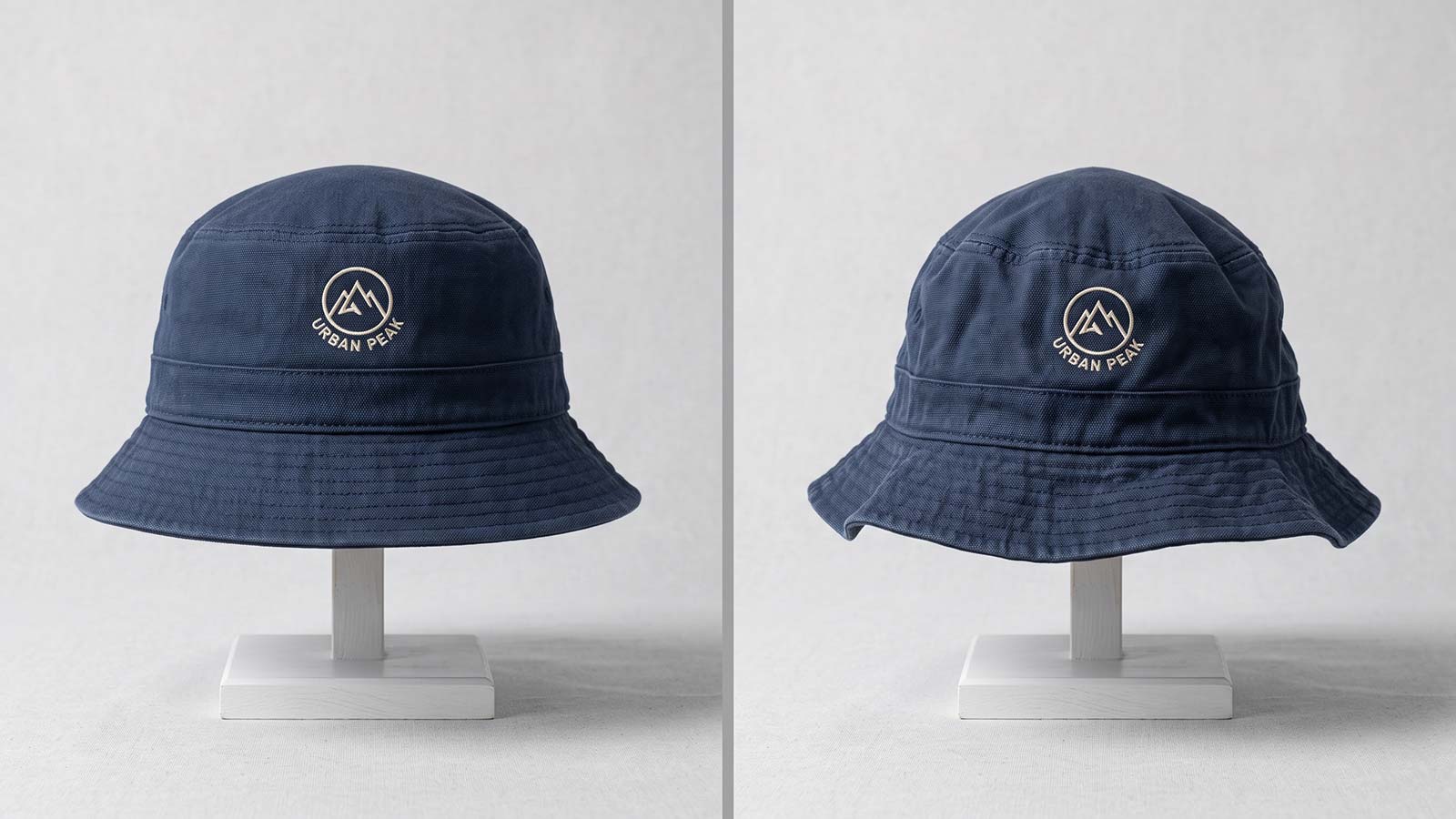
"Please make this hat from recycled polyester."
It sounds like a clear request.
But it leaves several important questions unanswered.
Is only the outer fabric recycled? What about the mesh, sweatband and closure? Is the material made from bottles, factory waste or discarded textiles? Can the supplier verify the recycled content for your order?
Without these details, two factories can quote very different products under the same description.
The solution is to specify the material, construction, components and documentation separately.
Quick Summary
Before developing recycled polyester hats, confirm these six points:
1. Recycled content percentage
2. Post-consumer or pre-consumer source
3. Fabric construction and finished GSM
4. Which hat components contain recycled material
5. Required performance and decoration tests
6. GRS, RCS and order-document requirements
If you do not know every value, ask the manufacturer to propose a specification and approve it through fabric swatches and samples.
What Is Recycled Polyester?
Recycled polyester is polyester made partly or fully from recovered material.
Most recycled polyester is made from polyethylene terephthalate, commonly called PET or rPET.
Possible feedstocks include:
· Post-consumer PET bottles
· Discarded polyester packaging
· Pre-consumer yarn or fabric waste
· Cutting-room scraps
· Discarded polyester garments and textiles
These sources should not be treated as interchangeable.
According to Textile Exchange's 2025 Materials Market Report, plastic bottles still account for an estimated 98% of recycled polyester feedstock. Textile-to-textile recycling remains limited, even though it is important for keeping textile waste within the textile supply chain.
Post-Consumer and Pre-Consumer Material
Post-consumer recycled polyester comes from material discarded after use. PET beverage bottles are the most common example.
Pre-consumer recycled polyester comes from manufacturing waste that has been diverted from the waste stream. Examples include yarn waste and eligible fabric scraps.
If the source matters to your brand claim, write it into the material specification. "Recycled polyester" alone does not identify the source.
Mechanical and Chemical Recycling
Most recycled polyester is currently produced through mechanical recycling. The material is collected, sorted, cleaned and processed into flakes or chips before being made into fibre or yarn.
Chemical recycling breaks polyester down into chemical building blocks. It may accept feedstocks that are difficult to process mechanically, but availability, cost, energy use and minimum quantities vary.
For most hat projects, buyers should focus first on verified content, fabric performance, availability and documentation. Add the recycling method when it is important to the product claim.
 How Much of a Hat Is Actually Recycled?
A hat contains more than its outer shell.
|
Component |
Possible recycled polyester route |
|
Outer shell |
Twill, ripstop, Taslan, microfiber, canvas or fleece |
|
Back panels |
Recycled polyester mesh |
|
Sweatband |
Woven or knitted recycled polyester |
|
Lining |
Lightweight woven or mesh fabric |
|
Internal taping |
Recycled polyester tape |
|
Closure |
Recycled webbing or hook-and-loop material |
|
Sewing thread |
Recycled polyester thread |
|
Embroidery thread |
Recycled polyester embroidery thread |
|
Labels |
Woven recycled polyester labels |
|
Beanie body |
Recycled polyester yarn or fleece |
A cap with a recycled polyester shell may still contain virgin polyester, cotton, nylon, foam, plastic or metal in other components.
For that reason, the product claim should identify:
· The recycled percentage
· The component covered by the claim
· Whether the percentage refers to fabric composition or the complete product
· Whether trims are included in the calculation
A practical bill of materials should record the composition of every major component.
Do not assume that "100% recycled polyester fabric" means "100% recycled hat."
 Choose the Fabric for the Hat Style
Recycled content does not determine how the fabric feels or performs. The finished result depends on yarn, construction, weight, finishing and supporting materials.
|
Fabric type |
Suitable hat direction |
What to check |
|
Recycled polyester twill |
Baseball caps, uniform caps and structured six-panel hats |
Surface stability, GSM and embroidery performance |
|
Recycled polyester ripstop |
Five-panel caps, running hats and outdoor caps |
Grid size, tear resistance, coating and air permeability |
|
Recycled Taslan or microfiber |
Running caps and lightweight sports hats |
Hand feel, drying, surface finish and heat sensitivity |
|
Recycled polyester mesh |
Trucker hats and ventilated panels |
Hole size, stiffness, recovery and colour consistency |
|
Recycled polyester canvas |
Firm casual caps and workwear styles |
Weight, crown structure and needle penetration |
|
Recycled polyester fleece |
Winter caps and fleece beanies |
Pilling, stretch recovery, warmth and embroidery support |
|
Recycled polyester knit yarn |
Cuffed beanies and knitted hats |
Yarn count, gauge, stretch, recovery and pilling |
Give the Factory Measurable Numbers
"Lightweight recycled polyester" is still too vague.
A woven fabric specification should normally include:
· Fibre composition
· Recycled-content percentage
· Recycled source
· Yarn denier or tex
· Filament and yarn type
· Warp and weft density
· Weave or knit construction
· Finished fabric weight in GSM
· Colour and dye method
· Functional finish or coating
· Finished-width and GSM tolerance
· Certification requirement
For knitted recycled polyester beanies, add:
· Yarn count
· Number of yarn ends
· Knitting gauge
· Rib or stitch construction
· Finished hat weight
· Stretch and recovery requirement
· Pilling requirement
"100% recycled polyester, 180 GSM" is more useful than "recycled fabric," but it still does not define the complete material.
Recycled Polyester Beanies Need Their Own Specification
A recycled polyester beanie is a different product from a woven recycled cap.
The body may be made from spun polyester yarn, filament yarn, chenille-like yarn or recycled polyester fleece. Each route produces a different surface and level of warmth.
Before sampling, confirm:
7. Yarn composition and recycled percentage
8. Yarn count and number of ends
9. Knitting gauge
10. Stitch or rib structure
11. Finished weight
12. Cuff depth and hat dimensions
13. Stretch recovery
14. Pilling performance
15. Logo method
16. Certification documents
For embroidery, approve the logo on the actual knit construction. A soft or open knit can distort around dense stitching.
A woven patch often places less stress on the beanie body. Its material composition and attachment method should still be recorded.
Test Performance Instead of Assuming It
Recycled polyester is a material source description. It is not a performance grade.
A recycled fabric may perform similarly to a virgin polyester alternative when its yarn and fabric specifications are properly controlled. That result must be confirmed through testing.
Depending on the intended use, review:
· Fabric weight and thickness
· Dimensional stability and shrinkage
· Air permeability
· Moisture movement and drying rate
· Pilling and abrasion
· Tear or tensile strength
· Colourfastness to perspiration
· Dry and wet rubbing
· Light exposure
· Water repellency
· Hydrostatic resistance, if relevant
Test the finished fabric in the production colour and finish.
A test report from a white greige fabric does not automatically approve a dark, coated or printed production fabric.
 Match Decoration to the Fabric
Recycled polyester hats can support embroidery, heat transfer, printing, patches and sublimation. The recycled content does not remove the normal risks associated with polyester.
Direct Embroidery
Check fabric puckering, needle damage, backing type and weight, stitch density, logo size, panel support and distortion around seams.
Lightweight ripstop and microfiber fabrics often require a controlled stitch count and suitable backing.
Heat Transfer
Check the actual production fabric for:
· Heat shrinkage
· Gloss or press marks
· Dye migration
· Adhesive strength
· Edge lifting
· Colour change
A transfer setting approved on one recycled polyester fabric should not be copied automatically to another construction.
Dye Sublimation
Sublimation can work well on suitable white or light recycled polyester.
Confirm the polyester percentage, base colour, transfer temperature and time, dimensional change, colour reproduction and artwork registration across seams.
Patches and Labels
Record the material composition of the patch, backing and thread.
If the product is promoted using a recycled-content claim, a virgin polyester patch can affect how the complete product claim should be written.
GRS and RCS: What Do They Verify?
The Global Recycled Standard (GRS) and Recycled Claim Standard (RCS) are third-party certification standards managed by Textile Exchange.
Both address recycled material and chain of custody.
RCS focuses on verifying and tracking recycled input. It does not cover chemical management or broader social and environmental processing requirements.
GRS includes additional requirements related to processing, chemical use and social and environmental practices. Textile Exchange describes GRS as having a higher minimum recycled-content requirement for product labeling.
 Scope Certificate and Transaction Certificate
These documents serve different purposes.
Scope Certificate - SC
A Scope Certificate shows that an organization is certified for specified products, processes and activities during a stated period. It does not prove that recycled material was used in every order.
Transaction Certificate - TC
A Transaction Certificate connects certified material to a specific commercial transaction or shipment.
When your brand requires an order-level certified claim, confirm before placing the order:
· The factory's valid certification scope
· The material supplier's certification scope
· Whether the selected product is covered
· Whether the order meets the applicable content rules
· Whether a TC or approved electronic transaction record can be issued
· Who pays the certification and document fees
· Which entity will receive the document
Textile Exchange updated GRS and RCS in 2026, with a transition period for implementation. Check the applicable version and claims policy when the order is placed.
Avoid Claims the Documents Cannot Support
Words such as "green," "eco-friendly" and "sustainable" are broad. They can imply benefits that recycled-content documentation alone does not prove.
The US Federal Trade Commission recommends stating the recycled percentage when a product contains only partial recycled content. Claims should also make clear whether they refer to the product, a component or the packaging.
Use specific wording such as:
Outer shell fabric contains 100% post-consumer recycled polyester.
Or:
Hat contains 62% recycled polyester by total product weight.
Avoid writing "made from recycled bottles" unless the feedstock and claim calculation can be supported.
"Recycled" also does not mean that the finished hat can be recycled through normal local collection systems.
Recycled Polyester Hat Buyer Checklist
Send the following information with your development request:
17. Hat style and intended use
18. Target order quantity
19. Outer-fabric construction
20. Required recycled percentage
21. Post-consumer or pre-consumer source
22. 100% recycled polyester or a custom blend
23. Yarn, density, GSM and finish requirements
24. Components that should contain recycled material
25. Colour and dye method
26. Decoration process
27. Performance tests and pass requirements
28. GRS or RCS requirement
29. Scope and order-level document requirements
30. Destination market and intended product claim
Certified stock fabric may offer a lower development quantity and shorter material lead time.
Custom yarn, custom weaving, custom knitting or special dyeing usually requires a higher material quantity and longer development time. Confirm these limits before approving the design route.
Build the Claim from the Product Specification
A reliable recycled polyester hat begins with a complete material specification.
Define the fabric first. Then record the recycled content of the shell, mesh, sweatband, thread, closure and labels. Test the finished material with its decoration. Verify the certification route before production.
Send FOREMOST the reference hat, artwork, intended use, quantity and recycled-content requirement. The development team can review the missing specification fields and propose materials for sampling.
Frequently Asked Questions
What is recycled polyester in hats?
Recycled polyester is polyester made partly or fully from recovered material, such as post-consumer PET bottles, manufacturing waste or discarded polyester textiles. The source and recycled percentage should be stated in the material specification.
Are recycled polyester hats the same quality as virgin polyester hats?
Recycled content alone does not determine quality. Yarn type, fabric construction, GSM, finishing, colourfastness and production control determine the final performance. Test the selected production fabric before bulk approval.
Can an entire hat be made from recycled polyester?
Many components can use recycled polyester, including the shell, mesh, sweatband, taping, thread, labels and closure. Other components may still contain different materials. Confirm the composition through a complete bill of materials.
What is the difference between GRS and RCS?
Both standards verify recycled material and chain of custody. RCS focuses on recycled-content tracking. GRS includes additional processing, chemical, social and environmental requirements.
Does a Scope Certificate prove that my order is certified?
No. A Scope Certificate shows that an organization has a valid certified scope. Order-level verification may require a Transaction Certificate or an approved electronic transaction record tied to the specific shipment.