Gold filigree and mother-of-pearl inlay tend to get the spotlight when people talk about heritage craftsmanship on headwear, and for good reason — they're dramatic, metal-and-shell techniques that photograph beautifully. But China's intangible cultural heritage registry runs far deeper than those two crafts, and a quieter set of traditions is just as actively being worked into hat crowns, brims, and bands right now. Straw weaving, fire-drawn imagery, ceremonial knotting, ethnic brocade, and dye-resist textile work are each finding their own foothold in contemporary headwear, and each brings a texture or visual language that metalwork simply can't replicate. This piece looks at that broader, lesser-discussed layer of intangible cultural heritage craftsmanship and how it's actually being applied to hats today.
🔽 Quick Navigation
- 📌 Why More Intangible Heritage Crafts Are Finding Their Way Onto Hat Design
- 📌 Fire and Straw: How Pyrography and Wheat Straw Weaving Bring Rustic Heritage to Headwear
- 📌 Threadwork Heritage: Chinese Knotting and Realistic Embroidery in Hat Design
- 📌 Ethnic Brocade Traditions: Dai, Wa, Li, and Song Brocade Patterns on Hat Bands
- 📌 Color Without Paint: Batik, Tie-Dye, and Velvet Flower Craft in Contemporary Headpieces
-
📌 From Technique to Finished Piece: Why These Crafts Belong to Limited and Custom Headwear
- ❓FAQ
Why More Intangible Heritage Crafts Are Finding Their Way Onto Hat Design

China maintains one of the largest national intangible cultural heritage registries in the world, recognizing thousands of techniques — from opera and festival traditions to specific textile, weaving, and dye methods — each tied to master practitioners responsible for training the next generation. Many of these techniques were never isolated craft-fair curiosities; they were embedded in everyday and ceremonial dress for centuries, which makes their return to headwear less like a trend and more like a continuation of a much older relationship between craft and crown.
This matters for hat design specifically because a manufacturing network built around both classic and technically demanding construction is what makes it possible to actually execute these techniques on a finished hat body rather than leaving them as flat textile samples. Straw, felt, and woven crowns each behave differently once a craftsperson starts working directly on the surface, so the base construction has to be right before any heritage technique can be added on top of it.
For a hat specifically, this matters because these techniques add something a printed graphic or standard embroidery pattern can't fake: visible, physical evidence of time and hand skill. A woven straw crown, a fire-etched landscape, or a hand-tied knot each carries the marks of process in a way that's immediately legible up close, which is exactly why heritage-driven and museum-collaboration headwear increasingly leans on these techniques rather than surface decoration alone.
Fire and Straw: How Pyrography and Wheat Straw Weaving Bring Rustic Heritage to Headwear

Pyrography — literally "drawing with fire" — uses a heated iron tip in place of a brush, burning graduated shades of brown directly into felt, wood, or paper to produce images with the tonal depth of ink-wash painting, without a single drop of pigment. Applied to a felt hat brim or crown, the technique can render an entire landscape scene, mountains fading into mist exactly the way they would in a traditional scroll painting, because the warmth of the effect genuinely comes from the burn itself rather than an applied color. It's a technique that rewards close inspection: from a distance it reads as a subtle tonal pattern, and up close it resolves into full pictorial detail.
Wheat straw weaving sits at the opposite end of the material spectrum but shares the same hand-executed intensity. It's a folk craft with roots stretching back centuries, built on hand-splitting and weaving natural straw into fine, tightly structured forms — traditionally baskets and everyday wares, but historically hats as well, since straw's natural strength and breathability made it a practical hat material long before it became a heritage showcase. A straw hat customization program gives a useful sense of how straw already functions as a hat-ready base material, which is part of why weaving techniques translate onto hat forms more naturally than crafts developed for flat textiles.
Threadwork Heritage: Chinese Knotting and Realistic Embroidery in Hat Design

Chinese knotting is one of the oldest surviving thread techniques on the national ICH registry, tracing back to ancient cord-based record-keeping before maturing into a decorative art form across the Tang, Song, Ming, and Qing dynasties. Hand-braided from a single continuous cord into symbolic, symmetrical patterns, the technique carries centuries of association with good fortune and connection — qualities that translate naturally into a hat band, a brim trim, or a knotted accent piece rather than requiring any reinterpretation to fit a modern silhouette.
Realistic embroidery techniques, sometimes called simulation embroidery, push in a different direction: rather than repeating pattern, they aim for lifelike, almost photographic imagery, borrowing light, shadow, and perspective principles from oil painting and translating them into thousands of graduated silk-thread colors. A crown embroidered with a bird mid-flight, feathers rendered in genuine tonal gradient rather than flat color blocks, is the kind of piece that takes this technique from decorative to genuinely painterly — and like most hand-executed heritage embroidery, no two finished pieces are ever quite identical.
Ethnic Brocade Traditions: Dai, Wa, Li, and Song Brocade Patterns on Hat Bands

Beyond Han court crafts, China's ICH registry also protects textile traditions specific to individual ethnic groups, and several of these brocades are finding a natural home as hat bands and trim pieces rather than full garments. Dai brocade, woven on backstrap looms by artisans in southwestern China, uses naturally dyed cotton and silk yarn to render peacocks, elephants, and geometric totems drawn from rainforest life. Wa brocade, from the mountain communities of Yunnan, leans on bold black-and-red palettes and angular geometric motifs woven on simple bamboo-and-wood looms. Li brocade, from Hainan, is sometimes described as a living fossil of textile history — a roughly three-thousand-year-old weaving tradition recording human figures, animals, and totems as a kind of wordless historical record.
Song brocade takes a different technical approach entirely: originating in Suzhou and often described as the finest of China's traditional brocades, it uses multi-weft jacquard weaving to produce elaborate, reversible patterns with a smooth, dense hand-feel and a restrained color palette associated with Song dynasty aesthetics. Used as a woven band around a hat crown, any of these brocades reads as a compact, wearable piece of regional textile history rather than an abstract pattern with no cultural anchor.
Color Without Paint: Batik, Tie-Dye, and Velvet Flower Craft in Contemporary Headpieces

Color batik uses beeswax as a resist agent, hand-painted onto fabric before repeated dyeing and dewaxing cycles reveal rich, layered patterns underneath — a process that makes every finished piece genuinely one of a kind, since wax cracking and dye penetration can never be perfectly repeated. Jiao xie, a related resist-dye tradition often called Chinese tie-dye, works by binding and stitching fabric before dyeing, producing the soft, misty color halos that appear once the bindings are untied — a technique historically grouped among China's oldest dyeing crafts and typically finished in natural indigo. Velvet flower craft, meanwhile, builds hair ornaments entirely from dyed silk velvet and fine copper wire through dozens of hand steps, producing flowers and insects with a soft, dimensional texture no printed fabric can match.
The table below lays out how these techniques compare on the points that matter most for a headwear brief.
| Craft | Primary Material | Signature Visual Effect | Typical Hat Application |
|---|---|---|---|
| Pyrography | Felt, wood, paper (burned, not painted) | Ink-wash-style tonal landscapes | Etched brim or crown scenes |
| Wheat straw weaving | Natural straw fiber | Fine, structured texture | Woven crowns and brim bases |
| Chinese knotting | Continuous silk or cotton cord | Symmetrical, symbolic patterns | Hat bands and knotted accents |
| Ethnic brocade (Dai/Wa/Li/Song) | Naturally dyed cotton, silk yarn | Regional motifs, geometric totems | Woven hat bands and trim |
| Batik / Jiao xie | Wax-resisted or bound fabric, natural dye | Soft, one-of-a-kind color halos | Dyed crown panels and brim edges |
| Velvet flower craft | Dyed silk velvet, copper wire | Dimensional floral and insect forms | Statement headpiece ornaments |
Reading across the table, the common thread isn't the material — it's that each effect is produced by the process itself rather than by printing or standard embroidery, which is exactly what gives heritage-driven headwear its depth under close inspection.
From Technique to Finished Piece: Why These Crafts Belong to Limited and Custom Headwear
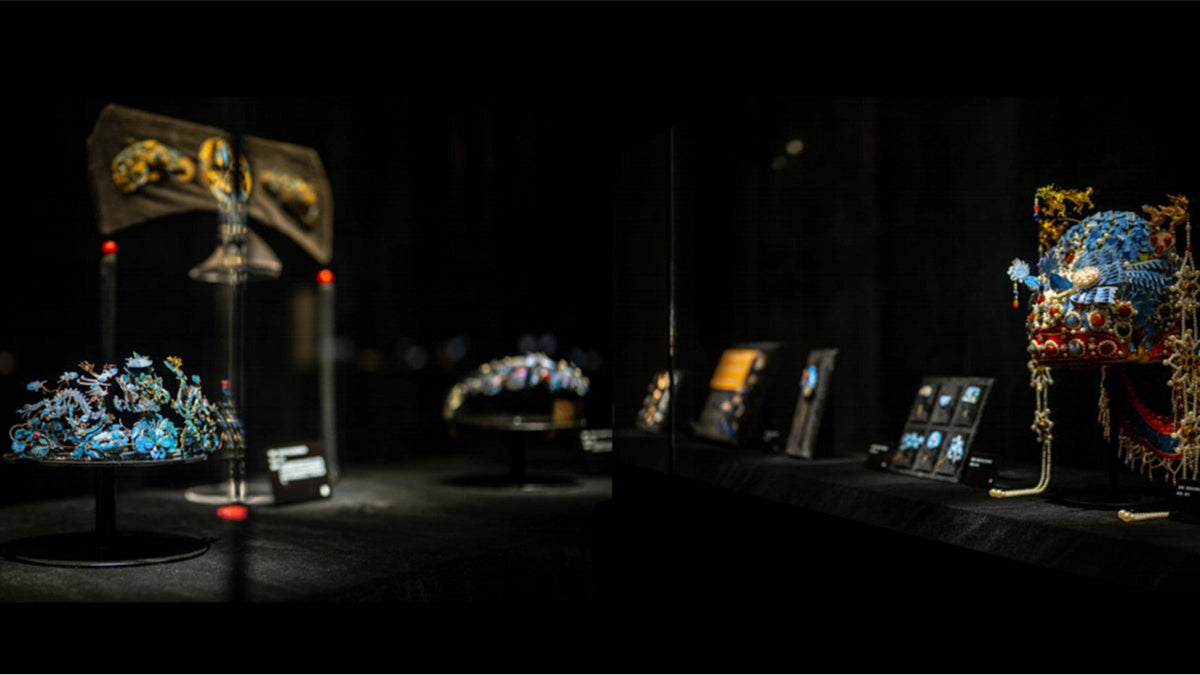
None of the techniques above compress easily into a standard bulk-production timeline. A batik crown or a hand-tied knotted band can take days rather than minutes per piece, and the skill required sits with individual craftspeople rather than a production line — which is exactly why this category of work tends to surface in limited runs, museum collaborations, and top-tier custom commissions instead of everyday product catalogs. A collection built around one of these techniques is documenting a living skill as much as it's producing a hat, and pieces made this way are often shown alongside the kind of heritage headwear archive a hat museum preserves, where historical and contemporary pieces sit side by side.
For a brand exploring this territory, the practical starting point is understanding which technique fits which base material and construction, since not every craft transfers cleanly onto every hat body.
❓FAQ
Q1: Is "intangible cultural heritage" an official designation or just a marketing term?
It's official — UNESCO maintains an international framework through its Intangible Cultural Heritage programme, and China separately maintains national and provincial registries recognizing specific techniques and master practitioners.
Q2: Can any of these techniques be applied to any hat material?
Not universally. Pyrography works best on felt, straw weaving is generally built into the hat body itself rather than applied afterward, and dye-resist techniques like batik need a fabric that takes natural dye evenly.
Q3: Why do heritage-craft hats cost more than a standard custom hat?
These techniques are almost entirely hand-executed by specialist craftspeople, with production measured in hours or days per piece rather than the standardized timelines of factory manufacturing, and that time is reflected directly in cost.
Q4: Are these crafts always paired with straw or felt hat bases?
Most commonly, yes, since both materials have long histories with hand-applied ornamentation, but knotting and brocade trims can also work on cut-and-sew or structured cap bases as band or accent pieces.
Q5: Where can a brand see these techniques applied to finished pieces rather than just described?
A dedicated heritage headwear collection or hat museum archive is generally the best reference point, since seeing finished construction answers most material and placement questions faster than a written brief alone.