In the mature fashion and outdoor retail markets, a high-quality custom hat is far more than a simple cut of fabric; it is a vehicle for micro-structural engineering. From a piece of cloth to a blockbuster product on the shelf that represents a brand's tone, the journey requires balancing material mechanics, fine-tuning high-precision branding techniques, and enforcing rigorous mass-production industrial control.
For design directors of emerging trend brands, outdoor gear procurement managers, and decision-makers looking to monetize brand equity, deeply deconstructing the core Custom Hat Manufacturing Process is the essential prerequisite to breaking through supply chain barriers, ensuring bulk delivery yield rates, and achieving premium brand premiums.
🔽 Quick Navigation
- 📌 Design Concept: From Concept to Blueprint
- 📌 Material & Structure: Fabric and Pattern Making
- 📌 Logo Craft: Embroidery, Printing, and Labeling
- 📌 Sampling Stage: Prototype Development and Revisions
- 📌 Mass Production & QC: Consistency and Standards
- 📌 Factory to Brand: Custom Logo Hats to Market
- 📌 Premium Custom hats Supply Chains Empower Your Brand
- ❓FAQ
Design Concept: From Concept to Blueprint

The origin of all industrialized mass production stems from a detailed technical blueprint. A brand’s creative concepts typically begin as hand-drawn sketches or 2D vector designs,but there is still a massive gap between these and the actual production line.
At this stage, the pattern maker must transform artistic creativity into a blueprint that is "ready for industrial production":
- Physical Curvature Calculation: The slant angle of the crown and the bending radius of the brim/visor must be precisely calculated based on ergonomics to ensure wearing comfort for various head circumferences.
- Stitch and Panel Planning: Whether it is a classic 6-panel cap or a retro 5-panel camp hat technical blueprint, the designer must pre-plan the seam allowance and piecing logic for every single seam on the blueprint with high precision.
- Tech Pack Standardization: A compliant engineering blueprint must accurately annotate the stitch pitch dimensions and trim specifications (thread, sweatband, buckle types) at every location. This serves as the first line of defense to prevent silhouette deviations during subsequent bulk production.
Material & Structure: Fabric and Pattern Making

Different application scenarios pose completely different physical requirements for the fabric's weight, toughness, and breathability.
In engineering-driven manufacturing,fabric selection and pattern design complement one another:
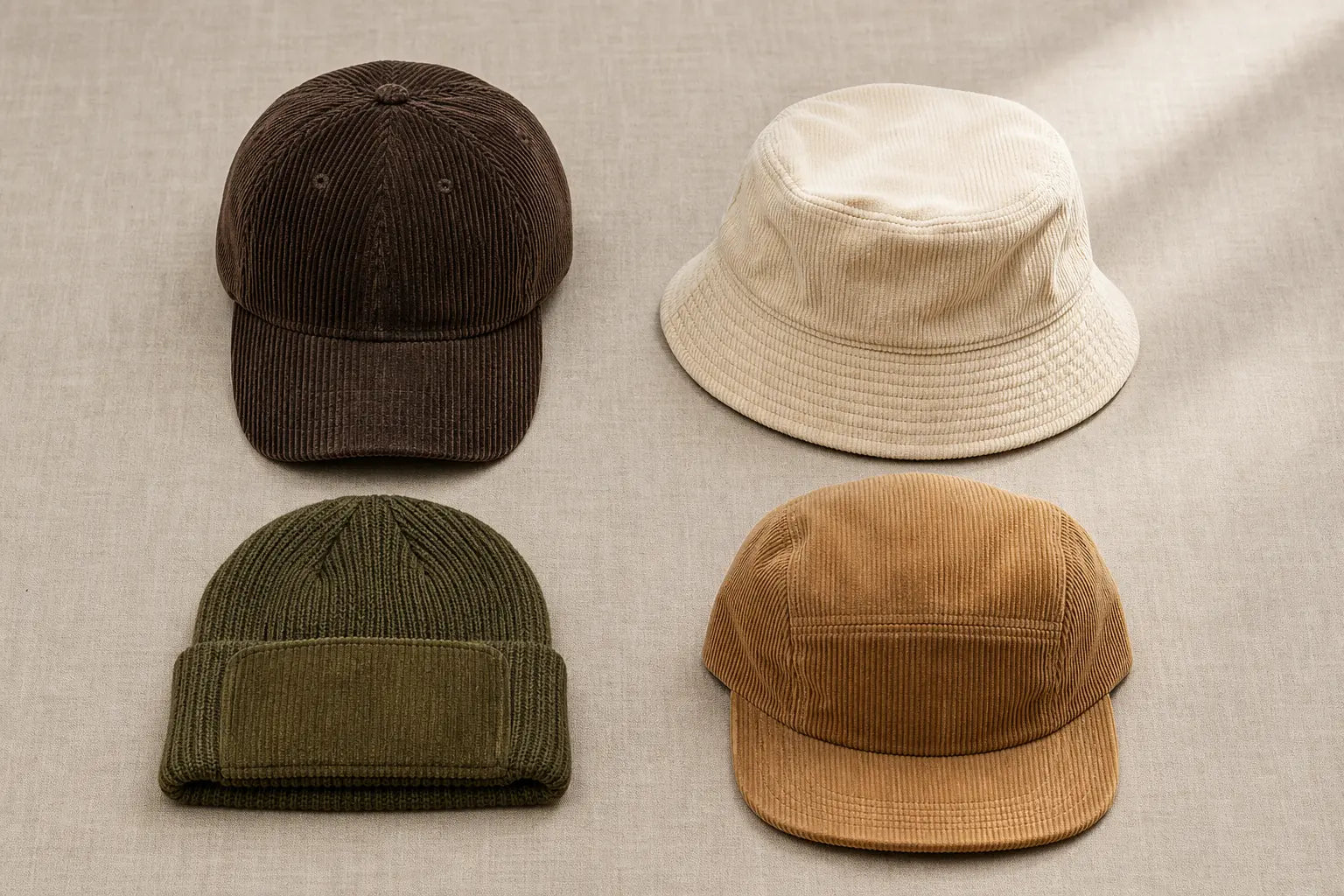
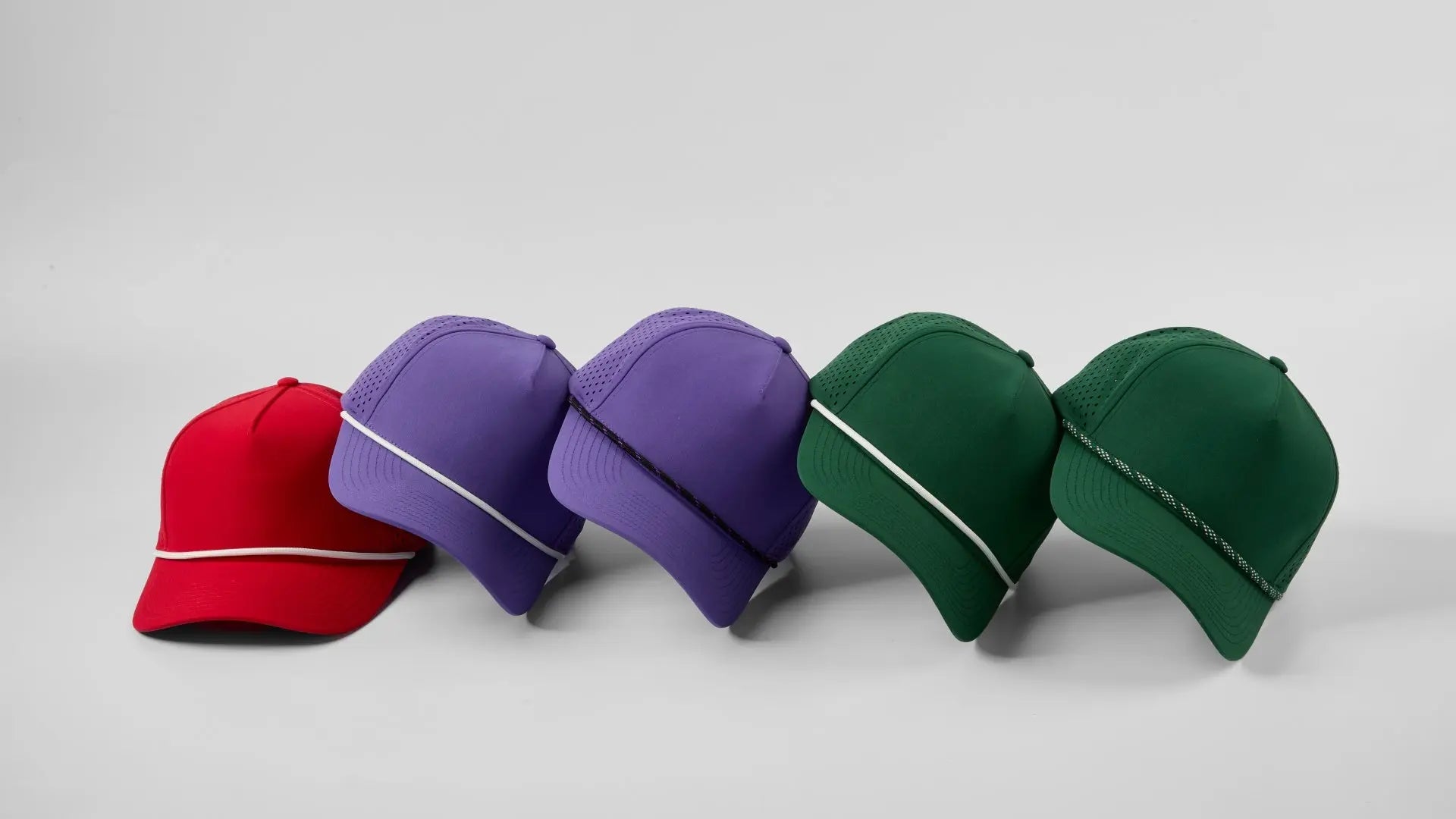
- Rational Selection of Fabric Technology: Premium streetwear and lifestyle brands today lean more toward eco-friendly, sustainable materials, such as organic cotton baseball caps. Its natural fibers are not only skin-friendly but also provide excellent structural body to support the crown architecture naturally. For outdoor or high-performance scenarios, composite polyesters or ripstop nylon with water-repellent properties are required instead.
- Structural Stiffness Engineering (Structured vs. Unstructured): Whether a hat remains rigid and upright depends on whether the front two panels are fused with buckram. "Structured" silhouettes utilize heat-pressed high-density foam or stiff non-woven interlining to keep a perfectly crisp, upright shape even when not worn, whereas "Unstructured" designs pursue a soft, packable, and retro form-fitting feel.
- Digital Grading and Cutting: Driven by computerized automated cutting machines (CAM), pattern pieces are calculated precisely for marker layout, maximizing the fabric width utilization while ensuring that the warp and weft yarn directions of each panel match identically to prevent the hat body from twisting after washing.
Logo Craft: Embroidery, Printing, and Labeling

The logo is the core visual anchor of a custom hat. How to translate a 2D brand visual onto a fabric surface with three-dimensional curves with high precision severely tests the equipment accuracy standards of the factory and the technical mastery of the digitizer.
Currently, the mainstream high-end branding techniques in the supply chain include:
- Three-Dimensional 3D Embroidery: In Snapback hats or flat-brim hats, to manifest a hardcore, premium feel, a 3D raised embroidery process is typically adopted. This technique pads high-density EVA foam (Puffy Foam) between the fabric and the embroidery threads, utilizing high-speed computerized embroidery machines for high-density satin stitching to forge visual and tactile edges with immense structural impact.
- High-Precision Screen Printing: For complex gradient lines or technical/functional style designs, industrial-grade screen printing technology can precisely permeate high-adherence eco-friendly inks into the fabric fibers. After high-temperature curing, it delivers extremely high wash-fastness and crack-resistant performance.
- Internal Privatized Labels: The real details are hidden inside the hat. Premium hats achieve a comprehensive branding visual enclosure through customized brand inner seam tapesand fine woven back labels.
Sampling Stage: Prototype Development and Revisions

Before entering bulk mass production, the "Prototype" is the sole bridge connecting ideal concepts with reality. The sampling stage is not a one-off manufacturing run, but rather a error-correcting closed loop that continuously tunes physical parameters.
The sampling process in a professional supply chain contains the following critical milestones:
- Initial Sample Development: The factory refers strictly to the Tech Pack, gathering the closest available stock fabrics and techniques to manufacture the first version of the physical sample. Its core purpose is to calibrate whether the overall fit and brim length meet expectations.
- Digitizing Revision: Because the shrinkage rate of embroidery threads varies across different fabrics, it is often necessary to conduct multiple fine-tunings of the embroidery stitch density on the sampling machine to prevent the fabric around the logo from puckering or showing thread gaps.
- Pre-Production Sample Confirmation: This is the finish line of the sampling stage. The Pre-Production Sample must be fabricated using the actual custom-dyed bulk fabrics and all final shaping trims from the mass production stage. Once the Pre-Production Sample is signed and approved by the brand, it becomes the highest physical benchmark for quality control on the bulk production line.
Mass Production & QC: Consistency and Standards
Once the pre-production sample is approved, the project officially enters the torrent of industrialization—Mass Production. The most core challenge of mass production is not making a single perfect hat, but rather how to ensure absolute consistency across thousands or even tens of thousands of hats.
A standard, modern hat mass production line executes extremely rigorous modular division of labor and Quality Control milestones:
- Refined Assembly Line Division of Labor: The assembly of the entire hat is broken down into over a dozen independent processes, such as front panel piecing, branding application, brim binding, sweatband stitching, and back closure assembly. Every workstation is equipped with dedicated jigs to standardize actions.
- Critical Industrial Shaping Process: This is the master technique for making a hat stand upright and sharp. The stitched hats are fitted onto metal cap molds under specific air pressure and temperatures, followed by high-pressure shaping using high-power steam to lock down the molecular structure of the fabric fibers, ensuring the hats maintain a perfect three-dimensional silhouette even after long-distance international transit.
- Full Inspection and Sampling Standards: The QC team executes strict thread trimming, symmetry quantification testing (detecting whether the brim is skewed), and metal detection (eliminating any traces of broken needles) at the end of the production line, preventing defective products from flowing into delivery trucks right from the source.
Factory to Brand: Custom Logo Hats to Market

Once mass production finishes quality control, the hat officially transforms from an "industrially manufactured product" into a "branded commodity" possessing market circulation value. The final step of commercialization implementation similarly requires a mature supply chain logistics and packaging protection scheme as support.
To ensure that the hats still maintain shelf-ready quality when they arrive at retail terminals and at the hands of overseas consumers:
Multi-Dimensional Crush-Proof Inner Support Protection
Because hard-shell or Structured baseball caps are highly prone to irreversible permanent creases upon being compressed, premium individual items like high-profile trucker hats must utilize customized paper cardboard inserts or bubble bags to prop up the crown during packing, cooperating with sturdy 5-ply corrugated export outer cartons to withstand the high-intensity stacking and squeezing forces during long-distance ocean freight.
Omnichannel Commercialization Empowerment
A mature custom supply chain will also provide brand owners with a full suite of commercialization services, including barcode (UPC/EAN Barcode) label printing and sticking, custom hang tag suspension, as well as dust-proof independent polybag packaging. From the very moment of container unloading, the commodities can bypass secondary sorting and be seamlessly dispatched directly to various e-commerce overseas warehouses or offline boutique retail stores for launch.
Premium Custom hats Supply Chains Empower Your Brand
In the fast-changing global retail environment, brands compete on creativity and marketing at the front end, but they compete on supply chain resilience and certainty at the back end. The full lifecycle of a hat, from design sketch to global market, is a practical exercise in a precise industrial production process.
For any mature brand or emerging label eager to build competitive barriers, choosing an engineering-driven manufacturing partner that deeply integrates "digital tech pack conversion," "fabric technology custom R&D," "high-precision embroidery craftsmanship," and "rigorous bulk quality control and shaping" is the ultimate commercial confidence to minimize operational risks, safeguard overseas sales gross margins, and allow design creativity to land perfectly.
❓Production FAQs: What Brands Ask Before Production
Q1: For the first bulk order, how do we keep the mass-produced hats identical to the sample?
Lock in the Pre-Production Sample (PPS). Never approve mass production based on a tech pack or a sample made with substitute materials. Insist on a final PPS using the exact bulk-dyed fabrics and trims. Seal this sample as the physical benchmark; any major bulk deviations will be your ground for rework or compensation.
Q2: Our logo is complex with very fine lines. Which technique prevents it from blurring?
If your logo has tiny fonts (under 5mm) or gradients, avoid 3D embroidery—thick threads and foam will smudge the details. Opt for high-precision flat embroidery, screen printing, or high-resolution woven patches stitched onto the front. This keeps details crisp and premium.
Q3: What should we consider when choosing back closures for high-quality hats?
Closures define brand tier. Streetwear and skate brands prefer durable, snappy plastic snapbacks. For premium luxury, golf, or lifestyle brands, use matching fabric straps with custom branded metal buckles, or genuine leather straps to boost perceived value and brand tone.
Q4: Why shouldn't 3D embroidery be used on thin or highly elastic fabrics?
3D embroidery uses high-density stitching to wrap thick EVA foam, pulling the fabric multiple times harder than flat embroidery. Thin knits or stretchy fabrics will tear or pucker severely, causing unrepairable warping. It perfectly pairs with heavyweight cotton twill or stiff canvas.