In August 2026, The Hat Magazine published a ten-page profile titled "Jeffrey Sun and His Hat World." The feature follows Foremost Hat founder Jeffrey Sun through more than three decades in the global headwear industry.
It covers a professional hat museum holding nearly 7,000 pieces, the expanding 101 Series Hat Culture Project, the 920 China Hat Festival, international creative partnerships and plans for future education and public-interest work.
Together, these are more than a record of one person's career. They show how Foremost Hat understands its place in the industry.
Why would a manufacturer invest in museums, cultural research, traditional craft and global exchange? Because the future of headwear depends on more than the ability to make another product. It also depends on what the industry chooses to study, preserve, connect and pass on.
Read The Hat Magazine Issue 110
More Than Thirty Years Changes the Questions You Ask
A young business often begins with immediate questions. What is selling now? How quickly can it be made? What price will the market accept?
Three decades in the same industry lead to a wider set of questions. Which forms continue to matter after a trend passes? Which skills are disappearing? What knowledge remains locked inside workshops and personal experience? How can cultural references enter a modern product with accuracy and respect?
Jeffrey's work, as described by The Hat Magazine, reflects this longer view. Manufacturing remains central, but it sits inside a broader understanding of headwear as design, craft, identity and industry knowledge.
Long experience does not make every decision easy. It improves the quality of the questions asked before a decision is made. That matters in product development, where material, shape, decoration, cost and production method constantly affect one another.
Why a Manufacturer Built a Hat Museum
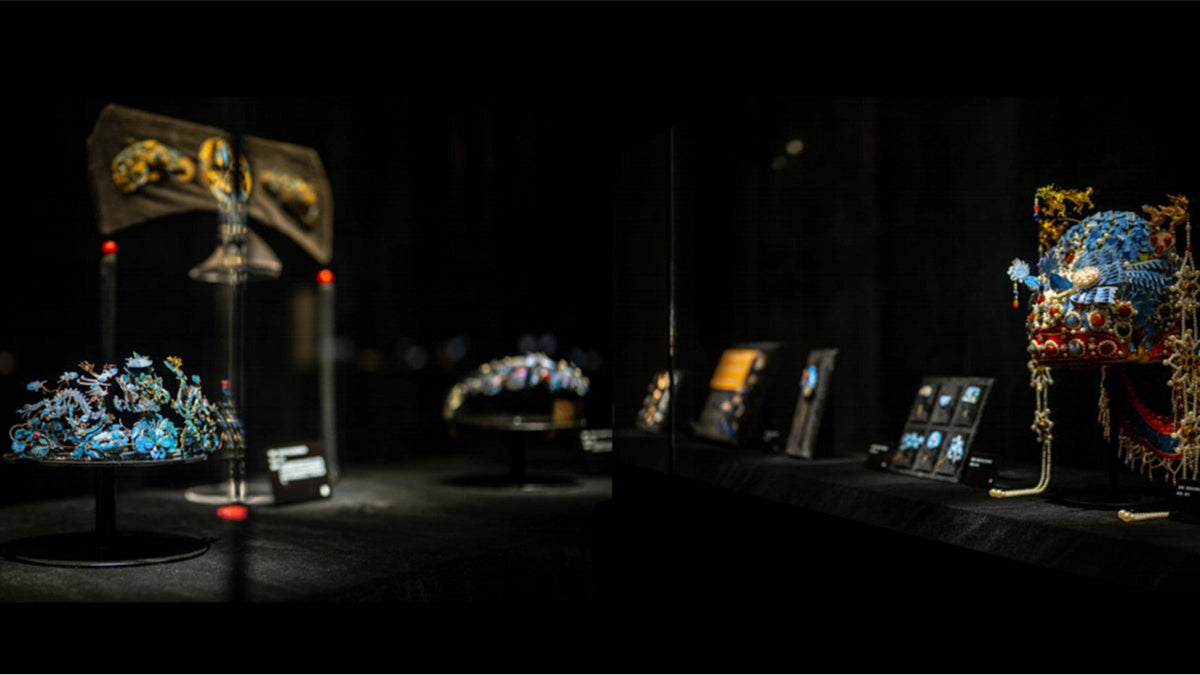
One of the central subjects in the magazine feature is the professional hat museum established by Jeffrey in Nantong, China. Its collection has grown to nearly 7,000 historical and contemporary objects gathered through years of travel and research.
The collection includes finished headwear, hat-making tools, lace, embroidery, woven structures and cultural artefacts from both East and West. Together, they record how people have solved practical and expressive problems through headwear.
A brim can respond to climate. A crown can communicate profession or status. A material can reveal what was locally available. An embroidery method can carry the identity of a community. These details give a hat meaning before it becomes a reference for a new design.
A Working Design Resource
For Foremost Hat, the museum can function as a working design resource. Designers can study proportions, structures, materials and decoration methods that developed across different times and places.
A historical silhouette may suggest a new crown profile. An old weaving method may lead to a material trial. An archival trim may influence the rhythm or placement of contemporary decoration.
The movement is not from archive to copy. It is from archive to research, then to material study, sampling and a new product suited to its own market.
This process reflects a broader change in headwear. When basic forms are easy to imitate, lasting difference comes from better references, clearer design intent and a deeper understanding of construction. A museum cannot replace market knowledge or technical testing. It can give both a stronger starting point.
The 101 Series and an Industry That Is Never Complete
The Hat Magazine also describes Jeffrey's 101 Series Hat Culture Project. The number carries a deliberate meaning. One hundred suggests completion. One hundred and one represents the next beginning.
That idea turns the project into more than a collection of events. It becomes a method for recording what the industry has created while keeping the door open to new work.
The programme includes 101 poems about hat culture, original work by 69 international designers, collaborations with 101 artists and projects with 101 masters of traditional craft. It also extends to straw-hat weaving patterns, interviews with distinguished figures, stories of influential people in the hat industry and proposed collaboration with 101 hat entrepreneurs.
Much of the world's hat knowledge still lives in individual hands and memories. A weaving technique may be known by one community. A blocking method may be passed from one milliner to an apprentice. A factory technician may understand how a material behaves without that knowledge ever entering a book.
Recording these experiences protects them from being lost. Bringing them into conversation with current designers and manufacturers gives them a chance to develop further.
Traditional Craft Survives When It Returns to Use
The magazine feature highlights work with lacquer art, mother-of-pearl inlay, bamboo weaving, wood carving and traditional embroidery. These crafts were developed for different objects, places and periods. Applying them to contemporary headwear requires more than placing an old motif on a new hat.
The first task is to understand the craft. The next is to decide what can responsibly enter a modern product.
A material must be suitable for wear. A decorative structure must survive handling and transport. The weight must work with the hat body. Restricted or sensitive materials may require responsible alternatives. Handwork will also carry natural variation, which must be understood before a design is offered as a repeatable commercial product.
Some techniques will remain appropriate for one-off or limited pieces. Others can be adapted for a wider collection while preserving their visual discipline. The value lies in making that distinction honestly.
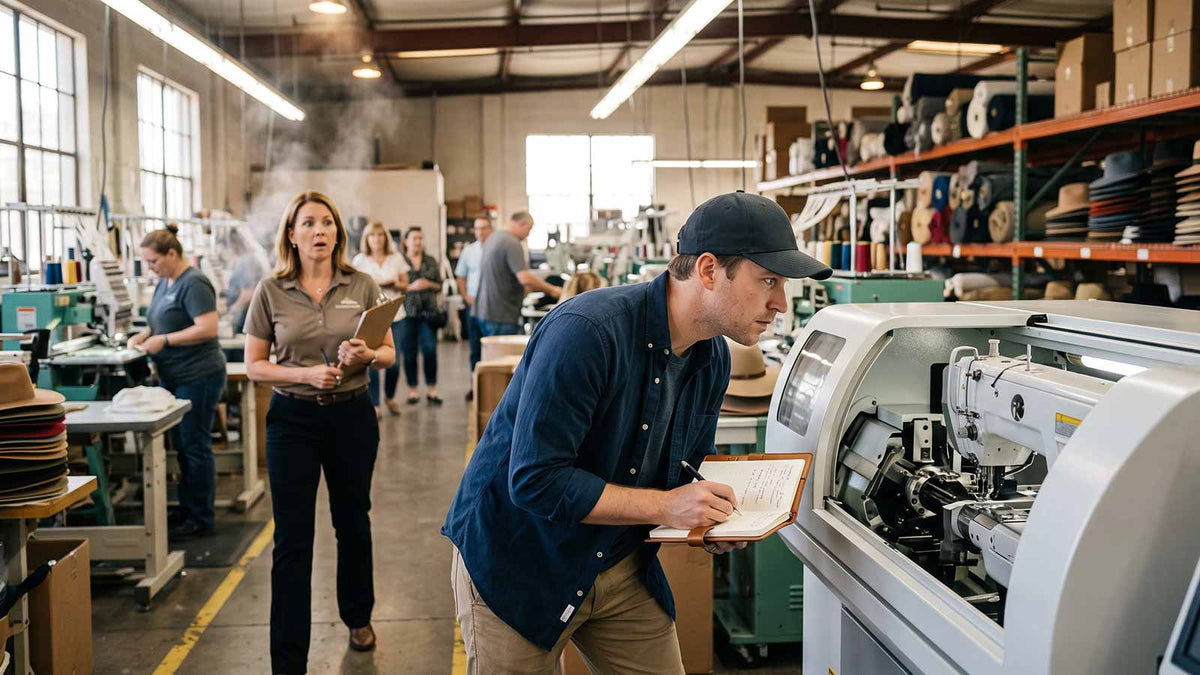
Foremost Hat occupies a useful position between cultural research and production. The museum and craft relationships provide knowledge. Pattern, material, sampling and manufacturing teams test how an idea behaves as a real hat.
This is how preservation can become active. A craft stays visible, useful and open to careful reinterpretation.
Connecting a Fragmented Global Industry
Headwear is a global industry made up of many specialised communities. Independent milliners, fashion brands, factories, material suppliers, museums, schools and traditional makers often work with different languages, standards and time horizons.
The initiatives described in The Hat Magazine try to create points of connection between them.
The 920 China Hat Festival brings people together around the making and wearing of hats. The 101 projects invite artists, designers, craftspeople, cultural figures and entrepreneurs into the same conversation. Interviews and written records preserve the experiences of people who helped build the industry.
Each group contributes something different. Designers bring form and visual language. Craftspeople bring material knowledge. Manufacturers understand repeatability and production risk. Entrepreneurs see how products enter markets. Museums protect references that might otherwise disappear.
Innovation becomes more useful when these perspectives meet. It can respond to culture, product reality and commercial use at the same time.
An Industry Needs Talent as Much as Capacity
The feature also looks forward. Jeffrey is considering hat design schools, a dedicated museum for embroidery and lace, and a World Hat Industry Public Welfare Foundation intended to support emerging talent, artistic innovation and cultural inheritance.
These plans reflect another long-term observation. Equipment and facilities can increase output. They do not automatically create designers, technicians or craftspeople with deep material knowledge.
The industry needs places where people can study, practise and exchange ideas. It also needs ways to record current work so future makers can understand how headwear evolved during our time.
These projects remain ambitions under development. Their direction is clear: industry growth should include knowledge, people and culture alongside production capacity.
What This Vision Means for Foremost Hat
The Hat Magazine profile presents Foremost Hat within a wider network of cultural and industrial work. The closing section recognises the FOREMOST team and CEO Fanny, whose leadership and operational strength support the company's long-term manufacturing foundation.
That connection matters. A museum, a cultural project and a manufacturing business have different functions, but they can strengthen one another when they share knowledge.
Foremost Hat therefore works across four connected roles:
· As a manufacturer, it turns materials, structures and design ideas into producible headwear.
· As a researcher, it studies historic forms, craft methods and global hat culture.
· As a connector, it brings designers, artists, craftspeople and industry partners into conversation.
· As a long-term participant, it considers what the industry will need to preserve and build for the years ahead.
These roles explain why the magazine story reaches far beyond a company profile. It shows a business participating in the wider development of its industry.
What This Means for Brands Developing Headwear
For a brand developing a hat collection, this wider background has practical value. It can improve the discussion that happens before a sample is made.
The team can ask whether a material supports the intended form, whether a decoration method suits the surface, whether a cultural reference has been understood, and whether a creative concept can remain coherent through production.
Not every project needs a museum reference or a traditional craft. Every project, however, benefits from a manufacturer that understands where headwear has come from, how it is constructed and how the industry is changing.
This does not remove the need for specifications, testing or sample approval. It gives those technical steps a clearer purpose.
The Future Is Built from What We Choose to Preserve
The Hat Magazine recorded Jeffrey Sun's collecting, cultural projects and plans for the future. Seen together, they describe a way of thinking about headwear.
Historical knowledge can support modern design. Traditional craft can find responsible new uses. Manufacturers can contribute to industry culture. International collaboration can introduce ideas that no single discipline would develop alone.
Foremost Hat will continue making headwear. It will also continue collecting, studying, connecting and sharing, because the future of the industry depends on what we create next and what we choose not to lose.
Explore the Foremost Hat Museum | Start a Conversation with Foremost Hat