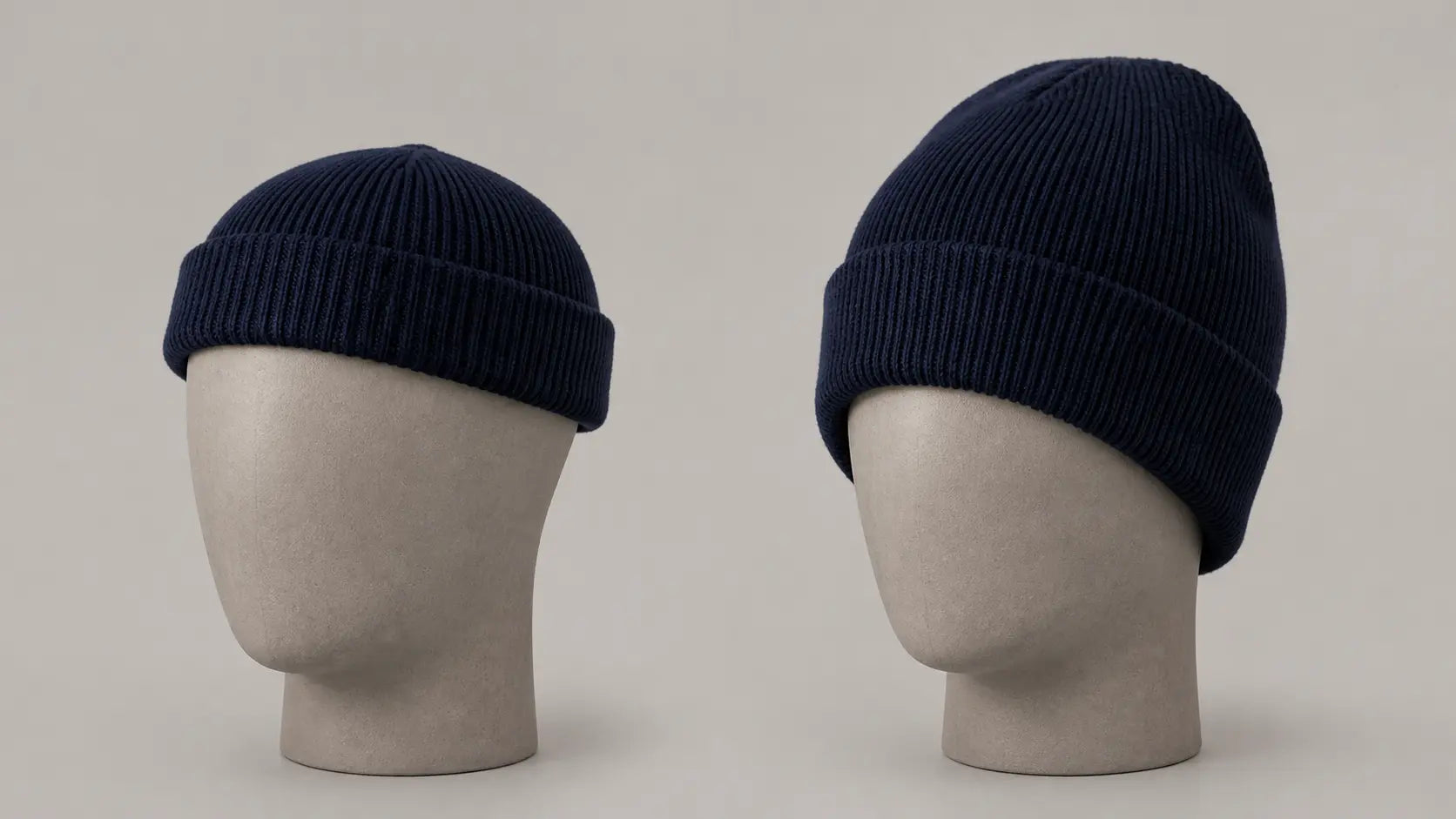
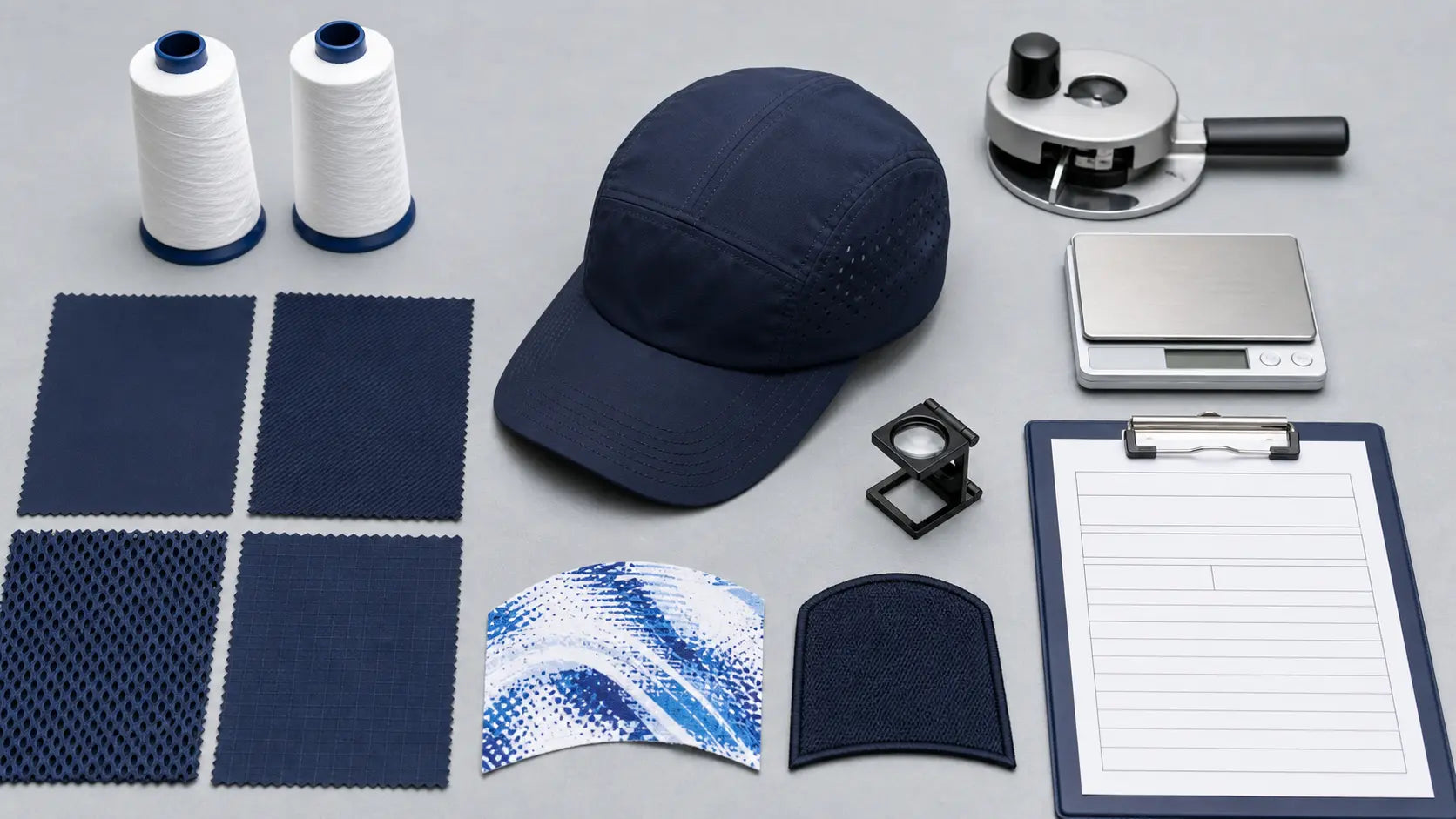
“Use a lightweight, durable nylon.”
The factory still has several decisions to make.
Should it use nylon 6 or nylon 6,6? Smooth filament or air-textured yarn? Plain weave, crinkle or ripstop? Does “water-resistant” describe a surface finish, a coating or the complete cap?
Different answers can produce very different hats.
A fabric may feel soft during sampling and tear beside the seam in bulk use. A heat-transfer logo may lift from a coated surface. A high-temperature press can leave gloss, shrinkage or distortion on a lightweight panel.
The solution is to connect each design word to a material field, test method and approved sample.
Define the Polymer and Yarn First
Nylon is the common name for a family of polyamide fibres.
A factory-ready specification should include:
|
Field |
What to state |
Why it matters |
|
Polymer type |
Nylon 6, nylon 6,6 or the exact approved polyamide |
Can affect dyeing, heat response, strength and supply |
|
Yarn linear density |
Warp × weft in denier or tex |
Indicates yarn mass per unit length |
|
Filament count |
Filaments per yarn, when relevant |
Changes surface, coverage and hand feel |
|
Yarn form |
Flat filament, textured filament, air-textured or spun |
Controls sheen, bulk and cotton-like character |
|
Construction |
EPI × PPI, mesh gauge or agreed knit construction |
Affects stability, tear behaviour and airflow |
|
Weave |
Plain, ripstop, oxford, twill or another structure |
Changes appearance and load distribution |
|
Finished weight |
GSM plus tolerance |
Influences body, drying load and seam handling |
|
Finish |
DWR, coating, calendering, crinkle or softening treatment |
Changes water performance, sound and touch |
|
Approval reference |
Swatch, colour standard and sealed cap sample |
Controls visual and tactile variation |
Nylon 6 and Nylon 6,6 Are Separate Materials
 The supplier should identify the polymer when it matters to the project.
Nylon 6 is often selected for dyeability and cost. Nylon 6,6 is often selected when greater abrasion performance and dimensional stability are required.
These are general material directions. Yarn design, weaving, finishing and fabric weight can reverse the result in a finished cap.
Do not approve one polymer as an automatic substitute for the other. Test the proposed bulk fabric against the product requirements.
Read Denier and Filament Count Together
Denier records the mass in grams of 9,000 metres of yarn.
A notation such as 70D/34F describes a 70-denier yarn containing 34 filaments. It does not identify the fabric weight, density, weave or coating.
ASTM D1907/D1907M provides a method for determining yarn linear density.
Use a complete purchase line:
Illustrative lightweight ripstop: 100% nylon 6, 70D/34F × 70D/34F, 210 × 160 EPI/PPI, mini-ripstop, finished 95 GSM ±5%, piece dyed, matte finish, fluorine-free water-repellent finish, no coating.
This example demonstrates the format. It is not a universal recommendation.
Use these GSM bands only as development references:
|
Internal working description |
Illustrative finished GSM |
Possible direction |
|
Ultralight |
40–80 GSM |
Packable caps, linings and very soft shells |
|
Lightweight |
80–140 GSM |
Running caps, soft five-panel caps and bucket hats |
|
Midweight or structured |
140–220+ GSM |
Firm outdoor caps and workwear-inspired styles |
These bands are not industry standards. A dense 90 GSM calendered fabric can feel firmer than a softer 140 GSM air-textured fabric.
Choose the Surface and Construction by Product
|
Nylon direction |
Typical character |
Development questions |
|
Smooth filament nylon |
Clean surface, low bulk and possible sheen |
Is the target bright, semi-dull or matte? Will press marks be visible? |
|
Air-textured or Taslan-type nylon |
Bulkier, softer and more cotton-like |
What yarn type, denier and hand-feel reference are approved? |
|
Crinkle nylon |
Intentional irregular texture and casual appearance |
How much crinkle and shade variation are acceptable? |
|
Ripstop nylon |
Reinforcement grid intended to limit tear propagation |
What grid size, base construction and tear-strength target are required? |
|
Nylon mesh |
Open structure for ventilation |
What gauge, stiffness, snag resistance and recovery are required? |
Taslan is associated with air-textured yarn technology. Supplier terms and constructions vary.
Write “air-textured nylon” with the actual yarn and fabric specification. Use Taslan as a brand or supplier reference only when the source is confirmed.
Ripstop does not mean tear-proof. The reinforcement grid changes how a tear may spread. The finished fabric still needs a tear test.
Convert “Durable” into Separate Tests
Strength is not one property.
|
Risk |
Test reference |
What to specify |
|
Surface wear |
ASTM D4966 or another agreed abrasion method |
Abradant, load, cycles, end point and appearance rating |
|
Tear propagation |
ASTM D1424, D2261 or the agreed method |
Warp and weft requirements and specimen condition |
|
Breaking strength |
ASTM D5034 or D5035 |
Direction, conditioning and minimum force |
|
Seam failure |
ASTM D1683 or an agreed seam method |
Seam type, stitch density, thread and failure requirement |
 Abrasion results depend strongly on test conditions. ASTM D4966 also warns that laboratory variation can be significant.
For purchasing, keep the laboratory, machine setup, abradant, load and evaluation method consistent. Small differences between reports may not predict a meaningful difference in cap life.
Test the finished fabric. A coating, softener or crinkle treatment can change strength and abrasion behaviour.
Control Sewing on Lightweight Nylon
Light nylon exposes sewing problems quickly.
Common failures include:
· Puckering beside panel seams
· Needle cutting or enlarged holes
· Seam slippage under tension
· Uneven feeding between coated and uncoated layers
· Visible thread tension on smooth surfaces
The tech pack should record:
1. Needle system and size
2. Thread type and ticket size
3. Stitches per inch
4. Seam type and allowance
5. Feed and tension settings approved during sampling
6. Seam-strength or slippage requirement
7. Approved appearance after conditioning and wear simulation
A heavier thread can make a light panel look more puckered. More stitches per inch can also increase perforation along the seam.
Approve the actual panel stack, including lining, support and seam tape.
Separate DWR, Coating and Waterproof Construction
DWR reduces surface wetting. AATCC TM22 evaluates the wetted pattern after controlled spraying.
Coating can increase resistance to water penetration. AATCC TM127 measures fabric resistance under hydrostatic pressure.
Waterproof headwear also needs control of seams, needle holes, vents, panel joins and closures.
A coating or calendered finish can change:
· Air permeability
· Hand feel and stiffness
· Fabric noise
· Adhesion of printing or heat transfers
· Seam strength
· Appearance after folding
Specify the coating chemistry, application side, target mass or thickness, and initial performance. Add requirements after the agreed care or ageing cycles when durability matters.
Test air permeability with the water requirement. A more water-resistant fabric can create a hotter cap when airflow drops.
Use Heat Carefully During Decoration
 Nylon can be sensitive to heat and pressure.
The safe process depends on the polymer, fabric weight, dye, coating and finish. A temperature that works on one nylon cap can distort another.
|
Decoration |
Main risk |
Factory-ready direction |
|
Heat transfer or DTF |
Gloss, shrinkage, dye movement or weak adhesion |
Use a nylon-compatible adhesive system and the lowest validated time-temperature-pressure profile |
|
Direct embroidery |
Puckering, needle cuts and a stiff logo area |
Define backing, hooping, stitch density, needle and approved sew-out |
|
Screen or digital printing |
Poor adhesion on DWR or coated surfaces |
Identify finish and coating side; test pretreatment, ink and curing profile |
|
Patch or badge |
Heat or attachment distorts a light panel |
Control patch weight, edge method and attachment process |
|
Laser cutting or perforation |
Melted edges, fused holes or distortion |
Approve hole size, spacing, edge appearance and strength after processing |
Stahls advises lower-temperature transfers and prior testing for heat-sensitive nylon. Some nylon fabrics also require an adhesive formulated for that surface.
Do not copy polyester press settings onto nylon.
Measure the panel before and after the full decoration cycle. Check gloss, colour, shrinkage, adhesion and cracking after the agreed conditioning or wash test.
Test Colour in the Final Process Condition
Nylon is commonly coloured with acid-dye systems, although the actual method depends on the polymer, yarn and supplier process.
Confirm the dye method rather than assuming it from the fibre name.
For caps, consider:
· AATCC TM15 for perspiration
· AATCC TM8 for dry and wet crocking
· AATCC TM16.3 for light exposure
· AATCC TM107 for water
· AATCC TM61 when laundering is relevant
· AATCC TM133 when hot pressing may affect colour
State the method option, minimum grade and acceptance rule.
Test the production shade, DWR or coating, thread and decoration together. Heat, water and finishing can change both appearance and colour transfer.
If the product carries a UPF claim, test the finished fabric using the required market method. AATCC TM183 measures UV transmission through fabric. Colour, construction, stretch, wet condition and finishing affect the result.
Verify Recycled Nylon and Source Claims
Recycled nylon still needs a complete performance specification.
Verify:
· Nylon 6 or nylon 6,6 content
· Recycled percentage
· Pre-consumer or post-consumer source, when claimed
· Supplier scope certificate and product category
· Order-level chain-of-custody documents
· Transaction certificate or approved electronic record, where required
· Final label and marketing-claim approval
Claims such as “made from fishing nets” or “ocean-bound material” need specific source evidence. A generic recycled certificate may not support that wording.
Mass-balance nylon also requires care. A mass-balance claim follows the rules of its own certification system. It should not be converted into a physical recycled-content percentage or an RCS/GRS claim without supporting documents.
GRS 5.0 and RCS 3.0 became effective on July 1, 2026, with mandatory implementation scheduled for December 31, 2026. Confirm the current Textile Exchange requirements when ordering.
Nylon Buyer Checklist
Send these fields with the development request:
8. Cap type and intended use
9. Nylon 6, nylon 6,6 or approved polymer
10. Recycled-content and source claim
11. Warp × weft denier or tex
12. Filament count and yarn form
13. EPI × PPI, mesh gauge or knit construction
14. Weave, ripstop grid or crinkle reference
15. Finished GSM and tolerance
16. Dye method, colour standard and finish
17. Abrasion, tear, breaking and seam requirements
18. DWR, coating and water-performance requirements
19. Air-permeability requirement
20. Decoration process and validated heat profile
21. Colourfastness, UPF and certification requirements
22. Sealed swatch, decorated panel and completed cap
If a value is unknown, ask the supplier to propose it and test the exact bulk construction.
Approve the Complete Nylon Cap
Nylon can create a soft packable cap, a crisp crinkle shell, a ventilated running cap or a durable outdoor style.
The fibre name cannot guarantee those results.
Use three steps:
Specify: Record the polymer, yarn, construction, GSM, finish and coating.
Test: Measure strength, seam, water, air, colour and decoration performance.
Approve: Seal the swatch, test reports, decorated panel and completed cap with revision numbers.
Send FOREMOST your reference cap, artwork, target use, quantity and destination market. The development team can then propose a measurable nylon specification for sampling.
Frequently Asked Questions
Should a cap specification distinguish nylon 6 from nylon 6,6?
Yes, when polymer performance or sourcing matters. The two materials can differ in dyeing, heat response, abrasion performance and dimensional stability. Test any proposed substitution on the finished fabric.
What is Taslan nylon?
Taslan is associated with an air-texturing process that gives filament nylon a bulkier, softer and more cotton-like hand. Record denier, construction, GSM and finish separately.
Is ripstop nylon tear-proof?
No. Ripstop uses a reinforcement grid intended to limit tear propagation. The yarn, base construction, finish and grid size still determine the result.
Is DWR nylon waterproof?
No. DWR mainly reduces surface wetting. A waterproof cap also needs suitable resistance to water penetration and control of seams, needle holes, vents and closures.
Can heat transfers be applied to nylon caps?
Yes, with a compatible adhesive and a validated heat profile. Test temperature, time and pressure on the production fabric, then check adhesion, gloss, shrinkage and colour movement.