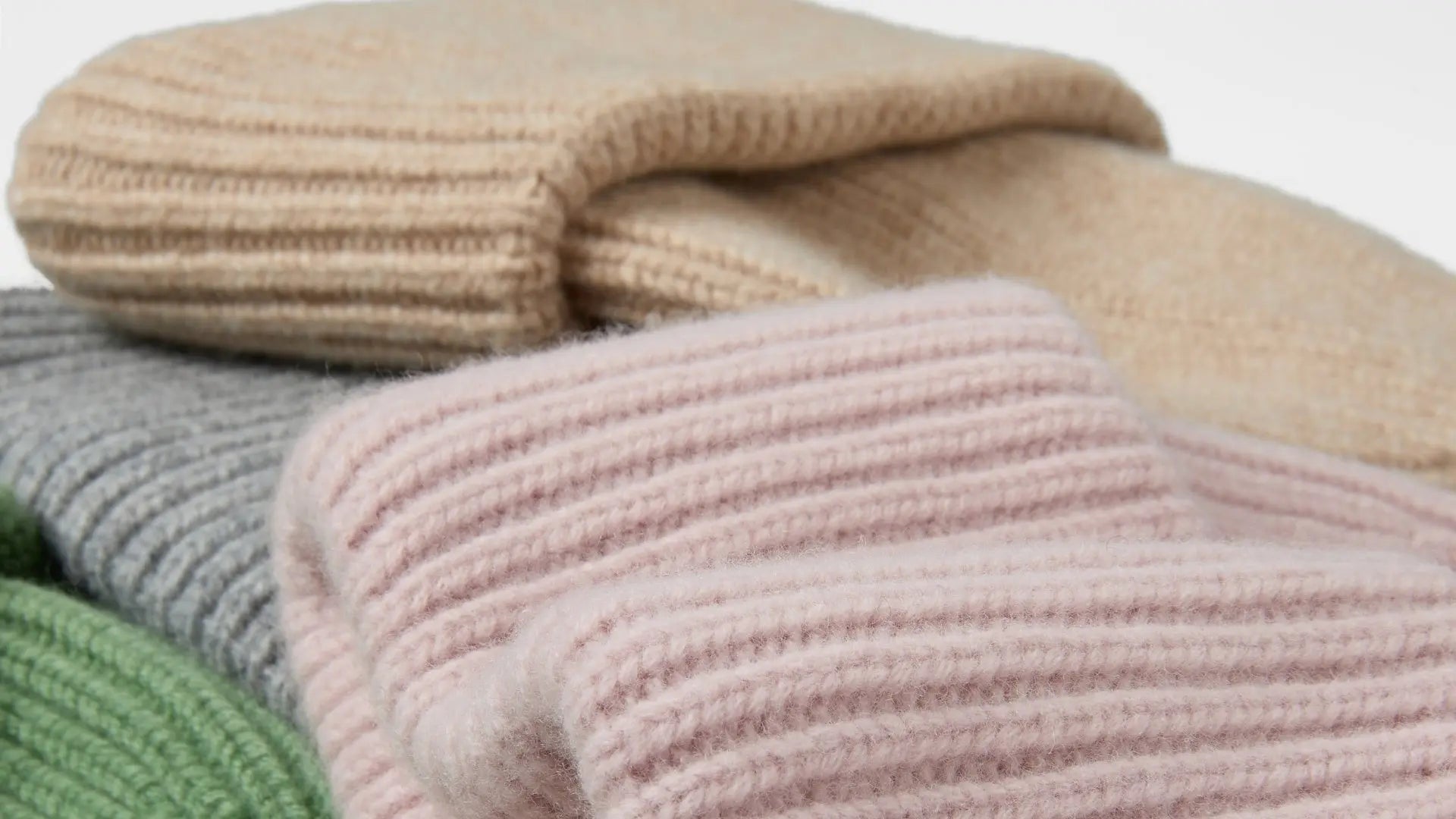
A fisherman beanie belongs to the cuffed-beanie family.
The key difference is proportion. A fisherman fit has a shallow crown and a shorter finished height. A standard cuffed fit has more crown depth and usually covers more of the ears.
This distinction sounds simple. Problems appear when a product team creates a fisherman beanie by shortening an existing cuffed-beanie pattern.
The new proportions can change the fit, stretch and logo position. A sample may look correct when laid flat but sit too high or slide upward when worn.
The right approach is to treat both products as part of the same construction family. Then compare the specifications that change their performance.
Start With the Right Comparison
“Fisherman beanie” describes a fit direction. It does not set one fixed cuff height.
Some fisherman beanies have a narrow cuff. Others use a wide or double-turned cuff. The more reliable features are a shallow crown, short finished height and reduced ear coverage.
|
Selection point |
Fisherman fit |
Standard cuffed fit |
|
Crown depth |
Shallow |
Medium or deep |
|
Finished height |
Short |
Medium or long |
|
Ear coverage |
Partial or above-ear |
Usually full |
|
Overall shape |
Close and structured |
Traditional and flexible |
|
Logo area |
More restricted |
Usually larger |
|
Fit tolerance |
Lower |
Higher |
|
Common use |
Streetwear and fashion |
Outdoor, workwear and merchandise |
Use this table as a starting point. The final decision should come from the product specifications and an approved physical sample.
Suggested visual 1: Place a front-and-side comparison of both fits here. Use the same yarn, colour, model and camera angle.
 Control the Specifications That Change the Fit
A few millimetres can make a visible difference in a shallow beanie. Fisherman styles therefore need clear measurement points and closer sample review.
Crown Depth
Crown depth controls the space between the cuff and the top of the beanie.
A shallow crown creates the fisherman shape. It also leaves less room for fit adjustment. If the crown is too shallow, the beanie may slide upward, feel tight around the opening or look undersized on a larger head. The logo may also sit too close to the top seam.
A deeper crown gives the wearer more flexibility and greater ear coverage. The tech pack should show exactly where crown depth is measured. Flat measurements provide only part of the answer, so test the sample on more than one head size.
Development reference. Measure the visible crown from the top edge of the finished cuff to the crown top, with the beanie relaxed and laid flat. A fisherman fit commonly starts around 8–11 cm. A standard cuffed fit commonly starts around 13–17 cm. This usually gives a total finished height of about 14–17 cm for a fisherman fit and 20–25 cm for a standard cuffed fit.
Treat these figures as sampling ranges. Yarn thickness, knit gauge, lining and target head size can all change the required measurement.
Cuff Height
Cuff height changes the front proportion of the product. A higher cuff provides more space for embroidery or a patch, while reducing the visible crown above it.
Specify the cuff in its finished, folded position. If the wearer can adjust it, include measurements for each intended position. Crown depth and total finished height give a clearer classification than cuff height alone.
Development reference. A fisherman cuff commonly starts around 5–7 cm. A standard cuffed beanie commonly uses 6–9 cm. Extra-wide branding cuffs may reach 9–11 cm. Measure the cuff in its finished position without stretching the knit.
A higher cuff reduces the visible crown when total height stays unchanged. Review crown depth and cuff height together rather than approving either measurement in isolation.
Head Opening and Stretch
The head opening must hold the beanie in place without creating excessive pressure. This balance is harder to achieve with a shallow crown because there is less material above the opening to stabilise the fit.
Check the relaxed opening, comfortable stretch and recovery after stretching. Yarn, rib structure and knitting density all affect performance. Poor recovery can make the product loose after repeated use. Excessive tension can make it uncomfortable.
Knit Gauge and Weight
Gauge, yarn thickness and finished weight affect shape. A fine-gauge knit usually creates a smoother and lighter product. Thicker yarn creates more volume and texture.
A heavy knit can overpower a shallow fisherman shape. A very light knit may lack enough structure to hold the intended silhouette. Include a target finished weight and an acceptable tolerance in the tech pack.
Suggested visual 2: Add a measurement diagram showing crown depth, finished cuff height and head opening.
Match Branding and Materials to the Product
A logo that works on a standard cuffed beanie may look crowded on a fisherman fit. Select the branding method together with the crown depth, cuff height and rib structure.
Logo and Decoration
 Direct embroidery is durable, but dense stitching can make the knit surface stiff. It may restrict stretch or pull the ribs out of shape.
Small embroidery and woven labels usually work well on fisherman fits. Leather and silicone patches can also work when their height, weight and stiffness are controlled. Standard cuffed beanies usually offer more room for larger decoration.
|
Branding method |
Fisherman fit |
Standard cuffed fit |
|
Small embroidery |
Recommended |
Recommended |
|
Large embroidery |
Use with care |
More suitable |
|
Woven label |
Highly suitable |
Highly suitable |
|
Leather patch |
Control size and weight |
More flexible |
|
Jacquard logo |
Good for integrated designs |
Good for larger designs |
Measure logo placement on the finished, folded product. Review the sample in both relaxed and stretched conditions.
Material Selection
Acrylic works well for commercial collections, promotional programs and team merchandise. It offers stable pricing, strong colour options and easy care. Check pilling, softness and recovery because quality varies.
Wool and wool blends suit premium and outdoor collections. Fine wool can support a clean fisherman shape. Thicker wool usually creates a fuller silhouette. Confirm shrinkage, hand feel, pilling and care requirements before production.
Cotton is useful for lightweight products, though its recovery is often lower. Recycled materials can support a sustainability-focused range. Confirm the recycled percentage, certification scope and material documents, then verify feel and performance with a physical sample.
Suggested visual 3: Show close-up samples of embroidery, woven labels, patches and jacquard logos on rib-knit cuffs.
Reduce Production and Quality Risks
 Fisherman fits are sensitive to small changes in proportion. A tolerance that works for a deeper beanie may create a visible difference in a shallow product.
During inspection, check crown depth, cuff height, head opening, finished weight, stretch recovery and logo position. Add shrinkage and packing-recovery tests where the material or programme requires them.
Measurements should be taken in a relaxed condition. The product should rest for an agreed period after washing, steaming or finishing.
Measure logo placement from the folded edge and a fixed centre or side reference. Then check the result on a head form or model. Yarn lots should also be controlled across large orders because dye-lot variation may become visible under retail lighting.
Packing can flatten the cuff or change the crown shape. Test the product after realistic compression and storage. It should return to the approved shape without special handling.
Suggested visual 4: Use a factory QC image showing crown-depth, cuff-height and logo-position measurements.
Choose the Fit for the Product Program
A fisherman fit works well for streetwear and fashion collections. Its short silhouette creates a clear visual identity. Small labels and restrained embroidery usually support this shape best.
A standard cuffed fit is usually more suitable for outdoor and workwear programs. It provides greater ear coverage, more branding space and better flexibility across different head sizes.
Both fits can work in a premium wool collection. Let the yarn guide the decision. Fine yarn can produce a clean fisherman shape, while thicker yarn often suits a deeper cuffed construction.
Corporate merchandise usually benefits from a standard cuffed fit. It is easier to size across a broad group and provides more room for an embroidered company logo.
Build the Tech Pack Before Sampling
A complete brief should define the product before development begins. Include:
1. Target customer and destination market
2. Crown depth, cuff height and head opening
3. Yarn composition, yarn count and knit gauge
4. Rib structure and finished weight
5. Logo method, dimensions and placement
6. Measurement and shrinkage tolerances
7. Testing and compliance requirements
8. Packaging and delivery requirements
The first sample should answer the main questions about shape, fit and decoration. The pre-production sample should confirm the final yarn, measurements, logo, colour and finishing process.
Approve the beanie as a complete product. Changing the yarn, gauge or decoration after fit approval can alter the final result.
Make the Final Decision From the Sample
A fisherman beanie is a shallow-crown version of the cuffed beanie. Its shorter proportions create different fit, branding and production requirements.
Choose a fisherman fit when the silhouette is the priority. Choose a standard cuffed fit when coverage, branding space and fit flexibility matter more.
Specifications start the development process. The physical sample confirms whether crown depth, cuff height, yarn, stretch and decoration work together.
Frequently Asked Questions
Is a fisherman beanie a type of cuffed beanie?
Yes. A fisherman beanie is generally a shallow-crown version of the cuffed beanie. Its shorter finished height creates less ear coverage and a closer fit.
Does a fisherman beanie always have a narrow cuff?
No. Cuff height varies. Fisherman beanies may use a narrow, wide or double-turned cuff. The shallow crown and short finished height are more reliable product features.
Which fit provides more space for a logo?
A standard cuffed fit usually provides more decoration space. Fisherman fits work well with small embroidery, woven labels and carefully sized patches.
Can the same knit specification be used for both fits?
The same yarn and rib structure can be used, but crown depth, cuff height, opening tension and logo position need separate approval for each fit.
Which fit has a lower production risk?
A standard cuffed fit is usually more forgiving. Fisherman fits are more sensitive to small changes in crown depth, stretch and finished height.
What should be checked before bulk production?
Check finished measurements, fit, stretch recovery, logo position, shrinkage, yarn colour and shape after packing. Approve these points on a pre-production sample.